How Much Does Car Shipping Cost?

The cost of car shipping can vary greatly depending on several factors, such as the distance being shipped, the type of vehicle being shipped, and the method of shipping (open or enclosed carrier, for example). On average, car shipping can usually cost anywhere from $400 to $2,000 for a standard sedan but can be significantly more for larger vehicles, or shipping over greater distances. It’s best to get a quote from a reputable car shipping company to get an accurate estimate for your specific situation.

Does Car Shipping Cost More The Greater The Distance?

The distance being shipped is one of the main factors that can affect the cost of car shipping. The further the distance, the more expensive the car shipping price will be. This is because the shipping company will have to spend more on fuel, labor, and other expenses to transport the vehicle a greater distance. Additionally, the demand for shipping cars over longer distances may be less, which can also drive up the cost.

In general, shipping a car a short distance (less than 500 miles) will be less expensive than shipping it a longer distance (more than 1000 miles). However, the specific cost will depend on other factors such as the type of vehicle being shipped, the method of shipping, and the company you choose.

Do Larger Vehicles Affect The Cost of Auto Transport?

The type of vehicle being shipped can also affect the cost of car shipping. Larger and heavier vehicles, such as trucks, SUVs, and vans, will typically cost more to ship than smaller and lighter vehicles, such as sedans and hatchbacks. This is because larger vehicles take up more space on the carrier and require more fuel and labor to transport. Additionally, special equipment may be required to load and unload larger vehicles, which can also add to the cost.

Exotic, high-value, and luxury vehicles may also cost more to ship than standard vehicles because they require special handling, and often require enclosed carriers for safe and secure transportation. These kinds of vehicles also have a higher insurance cost that the shipping company will want to cover.

Is It Cheaper With Open or Enclosed Car Transport?

The type of trailer used to ship a vehicle can also affect the cost of car shipping. There are two main types of trailers used to ship vehicles: open and enclosed.

Open trailers are the most common type used for car shipping. They are less expensive than enclosed trailers and are suitable for most types of vehicles. However, open trailers offer less protection for the vehicle, as they are exposed to the elements and other hazards during transport.

Enclosed trailers, on the other hand, provide more protection for the vehicle as they are fully enclosed. They are typically more expensive than open trailers but are recommended for high-value, luxury, and exotic vehicles as they offer more security and protection during transport.

Do Vehicle Transporters Consider Seasonality?

Seasonality can also affect the cost of car shipping. During peak shipping seasons, such as spring and summer, the demand for car shipping services tends to be higher, which can drive up the cost. Additionally, during the winter months, inclement weather conditions can make shipping more difficult and expensive, due to longer transit times, road closures, and the need for specialized equipment to handle snow and ice.

During peak seasons, shipping companies may also charge a premium for their services, as they are in high demand. On the other hand, during off-peak seasons, shipping companies may offer discounts or special deals to attract customers.

It’s important to note that the specific cost of car shipping will depend on other factors such as the distance being shipped, the type of vehicle and the type of trailer, and the company you choose. It’s always best to get quotes from multiple car shipping companies and compare prices to ensure you’re getting the best deal for your specific situation. Also, it’s worth considering the shipping date during the off-peak season, because it may save some cost.

The Original Car Shipping Quote Calculator

Direct Express Auto Transport originated the instant car shipping quote calculator in 2004. It is still the best, most sophisticated, reliable tool available anywhere online. We offer three options that we call tiers of car shipping estimates. The standard rate is the cheapest car shipping quote but may take longer. Use it if not in a hurry and are patient. The expedited car shipping rate is most recommended, and we have countless satisfied customers as a result because the shipping process tends to go quicker. The rush rate is our highest level of car shipping service, and we have many customers who are glad they went with that method.

Open vs Enclosed Car Transport

Auto Transport and Car Shipping

Regarding shipping a car, there are two options to choose from: enclosed and open car transport. Both have pros and cons, and the right choice depends on your specific needs and preferences. This article will take an in-depth look at open vs. enclosed car transport to help you make an informed decision.

Deciding Open vs. Enclosed Car Transport

On average, open-air car transport carriers cost about 33% less than enclosed shipping. Larger open-air car carriers can hold about 8-10 vehicles instead of about six for most enclosed car carriers. That mainly explains the difference in cost, though there are other factors as well. Approximately 97% of all auto transport shipments are in open car transport carriers.

Customers must first decide whether to ship their vehicle open vs. enclosed auto transport. The extra cost of enclosed car transport is the first significant consideration. It may cost roughly $1,000 to ship a regular sedan on a coast-to-coast open car transport. Choosing enclosed car shipping might raise the price to $1,500, which is an extra $500. That will give anyone some pause and prompt the question of whether that is necessary. Sometimes it is, and sometimes not.

Two Main Types Of Auto Transport Carriers

It is usually a binary choice whether to go to Open-Air Transport or Enclosed Transport. The two enclosed transport methods are treated the same, with the customer offering no alternative. However, there is a slight difference worth mentioning.

Enclosed car carriers are often hard-side and look the same as moving company trucks or semi-trailer freight, made of tin, aluminum, or fiberglass shells. Vehicles inside are entirely protected from the outside.

The other type of enclosed car transport is soft-side trailers, which typically have hard shells in the front, back, and top but a soft canvas pulled tight on the sides. It does an excellent job of protecting the vehicles inside from the outside, but never-the-less, some dirt may drift in.

What Is Open-Air Car Shipping?

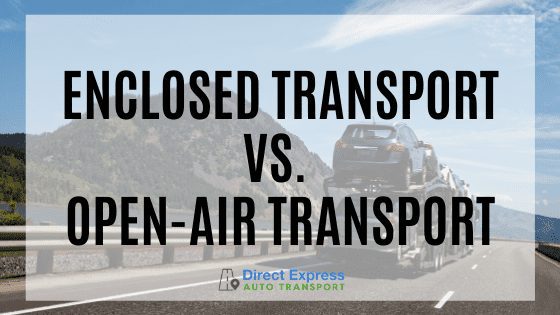
Open car transport, sometimes referred to as Open-Air Transport, is what you most often see rolling down the highway. It is open or exposed to the elements. Most car dealerships receive their inventory of vehicles in open-air carriers. Exposure to the elements means rain, snow, hail, dirt, and anything flying around in the open air. Open transport is the most cost-effective way to ship a vehicle, as multiple cars simultaneously reduce the cost per vehicle.

Open car shipping is ideal for people looking to transport their vehicle within a budget, as it is significantly less expensive than enclosed car shipping. It is also suitable for people looking to ship their vehicle within a shorter distance, as it is unnecessary to pay for the added protection that enclosed car shipping provides.

However, it is crucial to remember that open car shipping does not offer the same level of protection as enclosed car shipping. Exposing it to the elements and road debris during transit increases the risk of vehicle theft or damage.

The overwhelming majority of vehicles are shipped open vs. enclosed auto transport. Direct Express Auto Transport researched the number of open vs. enclosed transport carrier shipments on Central Dispatch and determined that 97% are open-air car transport.

One of the reasons why so many new car manufacturers are willing to ship their inventory to dealerships open car transport is because it is incredibly safe. Rarely are there physical damage complaints. And when that happens, it is usually something innocuous. Purportedly, open car transport damage complaints occur in only about 1% of car shipments, maybe less.

What Is Enclosed Car Transport?

Enclosed car transport, also known as enclosed trailer shipping, is a method of transporting a vehicle in a fully enclosed trailer. It offers the ultimate protection for the car shipped, protecting it from the elements, road debris, and any other potential damage during transport.

Enclosed car transport is the preferred method for luxury, exotic, and high-end vehicles, as well as vintage and classic cars. These vehicles require extra care and protection during transport to ensure that they arrive at their destination in the same condition as when loaded.

One of the significant benefits of enclosed car shipping is that it provides the highest level of security for the vehicle shipped. The car is fully enclosed and secured within the trailer, reducing the risk of theft or damage during transit.

Enclosed car transport is also ideal for people looking to transport their vehicle long distances, as it provides the most comfortable and secure option. However, the enclosed transporters are often undetected on the highway. The enclosed car shipping carriers protect the vehicles inside from the elements, assuring that neither rain, snow, sleet, hail, rocks, or anything else comes in contact.

Enclosed transport also means that vehicles arrive in the same condition they departed. Loading the car in a clean condition will mean it comes clean too. Enclosed carriers also have the extra protection of drip pans to prevent transmission fluids from getting on the bottom rack vehicles.

Only about 3% of vehicles are shipped enclosed by car transport. As mentioned, enclosed transport costs are typically 33% more than open-air transport. However, the expense for an auto transporter for hauling either an open-air or enclosed transport carrier is roughly the same. Because of that, the enclosed transport service must charge approximately 33% more than open-air car transporters.

When Does It Make Sense To Ship Your Car Enclosed?

  • Expensive Vehicles

If a customer is shipping a vehicle worth over $100,000, he should consider shipping enclosed transport for two reasons: First, why take the chance with something so expensive? Consider enclosed transport and an extra insurance policy. Secondly, we know that open-air car carriers shy away from hauling costly vehicles because of the liability they incur. If given a choice between a $35,000 Honda Accord or a $100,000 Tesla, an open-air car transporter will likely opt for the less expensive vehicle if the payday is the same. Why? Less financial exposure.

  • Low Ground Clearance

Low ground clearance vehicles of 4.5 inches or less should ship enclosed transport. Low-ground clearance vehicles will likely bottom out if driven onto an open-air carrier. That might damage the undercarriage of a vehicle. Nobody wants that. The enclosed car transporter has a lift gate for easy and safe loading.

  • Collector Cars & Antique Vehicles

Some collector cars are difficult to replace. They should use enclosed shipping for obvious reasons. But another consideration that open car carriers employ is whether a vehicle can make the trip. Older cars might have loose parts that may fall off or get damaged simply by being on an open carrier, banging and vibrating down the road. Older vehicles, even if not worth much anymore, can be a liability, and open transporters will choose more recent year models to haul instead. Unless a customer does not care, which is hard to imagine, it would be wiser to ship any vehicle older than 50 years by enclosed car transport.

Which is the Best Option for You?

The choice between enclosed and open-air car shipping ultimately depends on the individual’s specific needs and preferences. If you are looking to transport a luxury, exotic, or high-end vehicle, or if you are looking to transport your vehicle long distances, enclosed car shipping may be the best option.

Open car shipping may be the best option if you want to transport your vehicle within a budget and shorter distance.

Our Conclusion

In conclusion, both enclosed and open-air car shipping have pros and cons, and the choice depends on the individual’s specific needs and preferences. It is essential to weigh the benefits and drawbacks of both options and choose the method that best suits your needs.

The most important thing is to ensure that your vehicle arrives at its destination in the same condition as loaded. Direct Express Auto Transport is committed to delivering your vehicle safely and soundly whether you choose enclosed or open car transport.

Car Shipping Quote Calculator

What Are Car Shipping Quote Calculators?

Car shipping quote calculators are a convenient and efficient way to estimate the cost of shipping a vehicle from one location to another. In 2004, Direct Express Auto Transport originated the first online tool, an instant car shipping quote calculator, to take into account various factors that affect the cost of shipping, such as the distance of the shipment, the type of vehicle, and the level of service desired. It was innovative and ground breaking. Our calculator changed the auto transport industry for the better.

What Basic Information Does The Cost Calculator Need?

When using a car shipping quote calculator, the first step is to enter the pickup and delivery ZIP codes for the vehicle. This information is used to determine the distance of the shipment, which is one of the main factors that affects the cost of car shipping.

Next, the user must specify the type of vehicle that is being shipped. The size, weight, and value of the vehicle all play a role in determining the cost of car shipping. For example, a compact car will typically cost less to ship than a large SUV or truck.

In addition to the vehicle information, the user must also select the level of service desired. There are typically two options: open transport and enclosed transport. Open transport is the more affordable option, as the vehicle is shipped on an open trailer with other vehicles. Enclosed transport, on the other hand, offers more protection for the vehicle as it is shipped in a fully enclosed car transport trailer.

How To Read An Auto Transport Quote

Once all of the information has been entered, the car shipping quote calculator will provide an estimate of the cost of shipping. This estimate takes into account the distance of the shipment, the type of vehicle, and the level of service desired.

Using our car shipping quote calculator is a great way to get an idea of the cost of shipping a vehicle before making a final decision. However, it is important to keep in mind that the estimate provided by the calculator is just that, an estimate. The final cost of shipping may vary depending on various factors, such as fuel prices and route changes.

Direct Express Auto Transport goes one step further than all other competitors, by providing three tiers of car shipping prices, for Standard, Expedited and Rush service. That is one reason why our car shipping quote calculator is best.

Selecting The Right Car Transport Service For You

A car shipping quote calculator can also take into account additional car transport services that may be required, such as door-to-door delivery, terminal-to-terminal delivery, or expedited shipping. These options may affect the final cost of shipping and should be considered when using a car shipping quote calculator. Our cost calculator provides door-to-door quotes, which is generally considered faster and most convenient to the customer.

Another important consideration when shipping a car is the type of transport. Open transport is the most common and affordable way to ship a car, but it does come with a few risks. Enclosed transport, while more expensive, offers more protection for your vehicle and is recommended for luxury or classic cars, or vehicles with high value.

When using a car shipping quote calculator, it is important to compare quotes from multiple companies to ensure that you are getting the best deal. It is also a good idea to read reviews of the car shipping companies before making a final decision. This will help you to get a better understanding of the level of service and reliability of the company, as well as any potential issues that may arise during the shipping process.

What Other Factors Affect A Car Shipping Quote?

It’s also important to keep in mind that there are other factors that can affect the cost of shipping a car. For example, shipping a vehicle during peak season, such as summer, can be more expensive than shipping it during the off-season. Additionally, shipping a car to a remote or rural location may also result in a higher cost.

Another important consideration when shipping a car is insurance coverage. Most car shipping companies will offer some level of insurance coverage, but it’s important to make sure that the coverage is sufficient for your needs. For example, if you’re shipping a luxury or classic car, you may need additional coverage to protect the vehicle’s value. The best car shipping quotes will include vehicle insurance.

Preparing Your Car For Transport

When preparing a car for shipping, it’s important to remove all personal items from the vehicle and to make sure that the car is in good working condition. This will help to ensure that the car arrives at its destination in the same condition as when it was shipped. Additionally, it’s also important to keep accurate and detailed records of the vehicle’s condition before shipping, including photos of any damages, and make sure you have a copy of the bill of lading, which is a legal document that proves the car was shipped and the condition it was in when it was shipped.

Understanding The Car Shipping Process From Start To Finish

It is important to communicate clearly with the car shipping company. Ask them questions, if you have any, and make sure you understand the entire process. It’s essential to have a clear understanding of the car shipping process, including the estimated time of arrival, pick-up and delivery schedules, and any other important details.

In conclusion, shipping a car can be a complex process and there are many factors to consider. A car shipping quote calculator is a useful tool for estimating the cost of shipping, but it’s important to keep in mind that the estimate provided is just that, an estimate. By considering factors such as insurance coverage, type of service, and preparation of the vehicle, and by communicating clearly with the shipping company, you can ensure that your vehicle is shipped safely and cost-effectively.

Top 20 Best Used Car Websites

When buying a used car, the internet has made the process easier and more convenient than ever. With so many websites claiming to offer the best deals on used cars, it can be overwhelming to determine which ones are worth your time and trust. Direct Express Auto Transport has shipped over 300,000 used cars over the past twenty years. This article has compiled our favorite 20 online used car buying websites.

1. CarGurus

CarGurus is a popular website that helps you find great deals on used cars. This website provides you with a comprehensive list of used cars for sale near you, along with detailed information about each vehicle, including photos, specs, and customer reviews. Additionally, CarGurus uses a proprietary algorithm to calculate the fair market price of each vehicle based on recent sales, so you can be sure you’re getting a fair deal.

2. Autotrader

Autotrader is another popular website for finding used cars. This site allows you to search for cars based on a wide range of criteria, including make, model, year, and price. You can also refine your search based on specific features, such as the car’s color, transmission type, and fuel efficiency. Autotrader also provides detailed information about each vehicle, as well as customer reviews, to help you make an informed decision.

3. Cars.com

Cars.com is a comprehensive resource for finding used cars. This site offers a large selection of used cars for sale, along with detailed information about each vehicle, including photos, specs, and customer reviews. Additionally, Cars.com provides you with a wealth of information and resources to help you make the best decision, including articles and guides on buying used cars and financing options.

4. Craigslist

Craigslist is a well-known online marketplace where you can buy and sell a wide range of goods, including used cars. While this site may not have the same level of polish as some of the other websites on this list, it’s still a great place to find a used car. Just be sure to exercise caution when using Craigslist, as there are some scams and fraudulent listings to be aware of.

5. TrueCar

TrueCar is a website that helps you find the best deal on a used car. This site provides you with a comprehensive list of used cars for sale, along with detailed information about each vehicle, including photos, specs, and customer reviews. Additionally, TrueCar provides you with a fair market price for each vehicle, so you can be sure you’re getting a good deal.

6. Edmunds

Edmunds is another great resource for finding used cars. This website offers a wide selection of used cars for sale, along with detailed information about each vehicle, including photos, specs, and customer reviews. Additionally, Edmunds provides you with valuable resources and tools to help you make an informed decision, including articles on financing and buying used cars, as well as a car loan calculator.

7. Kelly Blue Book (KBB)

Kelly Blue Book, or KBB, is a trusted source for used car information and pricing. This website provides you with a comprehensive list of used cars for sale, along with detailed information about each vehicle, including photos, specs, and customer reviews. Additionally, KBB provides you with a fair market price for each vehicle, as well as expert reviews and ratings, to help you make an informed decision.

8. NADAguides

NADAguides is another great resource for finding used cars. This website offers a wide selection of used cars for sale, along with detailed information about each vehicle, including photos, specs, and customer reviews. Additionally, NADAguides provides you with a wealth of information and resources to help you make an informed decision, including articles on financing and buying used cars, as well as a car loan calculator.

9. Carfax

Carfax is a website that provides you with a detailed history of any used car you’re considering purchasing. This site allows you to run a background check on a vehicle, giving you valuable information about its past, including accidents, service history, and ownership history. This information can help you make an informed decision about the condition and value of a used car.

10. Carsforsale.com

Carsforsale.com is a comprehensive resource for finding used cars. This website offers a large selection of used cars for sale, along with detailed information about each vehicle, including photos, specs, and customer reviews. Additionally, Carsforsale.com provides you with a wealth of information and resources to help you make an informed decision, including articles on financing and buying used cars, as well as a car loan calculator.

11. Carsdirect

Carsdirect is a website that makes it easy for you to find the perfect used car. This site offers a wide selection of used cars for sale, along with detailed information about each vehicle, including photos, specs, and customer reviews. Additionally, Carsdirect provides you with a car loan calculator, as well as articles and guides on financing and buying used cars, to help you make an informed decision.

12. CarSoup

CarSoup is a website that helps you find the best deals on used cars. This site offers a wide selection of used cars for sale, along with detailed information about each vehicle, including photos, specs, and customer reviews. Additionally, CarSoup provides you with a car loan calculator, as well as articles and guides on financing and buying used cars, to help you make an informed decision.

13. CarWow

CarWow is a website that makes it easy for you to buy a used car. This site offers a wide selection of used cars for sale, along with detailed information about each vehicle, including photos, specs, and customer reviews. Additionally, CarWoo provides you with a car loan calculator, as well as articles and guides on financing and buying used cars, to help you make an informed decision.

14. Carvana

Carvana is a website that offers a unique and convenient way to buy a used car. This site allows you to shop for used cars online, with a wide selection of vehicles available for purchase. Carvana also provides you with detailed information about each vehicle, including photos, specs, and customer reviews, to help you make an informed decision. Additionally, Carvana offers a 7-day return policy, so you can be sure you’re happy with your purchase.

15. Vroom

Vroom is a website that offers a convenient way to buy a used car. This site allows you to shop for used cars online, with a wide selection of vehicles available for purchase. Vroom also provides you with detailed information about each vehicle, including photos, specs, and customer reviews, to help you make an informed decision. Additionally, Vroom offers a 7-day return policy, so you can be sure you’re happy with your purchase.

16. LeaseTrader

LeaseTrader is a website that offers a unique way to buy a used car. This site allows you to take over the lease of a used car, rather than buying it outright. This can be a great option for those who want a new car every few years without having to go through the process of selling their current vehicle. LeaseTrader provides you with a comprehensive list of used cars available for lease transfer, along with detailed information about each vehicle, including photos, specs, and customer reviews.

17. Swapalease

Swapalease is another website that offers a unique way to buy a used car. This site allows you to take over the lease of a used car, rather than buying it outright. This can be a great option for those who want a new car every few years without having to go through the process of selling their current vehicle. Swapalease provides you with a comprehensive list of used cars available for lease transfer, along with detailed information about each vehicle, including photos, specs, and customer reviews.

18. Leasehackr

Leasehackr is a website that provides you with the tools and resources you need to find the best lease deals on used cars. This site offers a comprehensive list of used cars available for lease, along with detailed information about each vehicle, including photos, specs, and customer reviews. Additionally, Leasehackr provides you with articles and guides on leasing and buying used cars, as well as a lease calculator, to help you make an informed decision.

19. Automotive.com

Automotive.com is a comprehensive resource for buying a used car. This site offers a wide selection of used cars for sale, along with detailed information about each vehicle, including photos, specs, and customer reviews. Additionally, Automotive.com provides you with a wealth of information and resources to help you make an informed decision, including articles on financing and buying used cars, as well as a car loan calculator.

20. MotorTrend

MotorTrend is a website that provides you with comprehensive coverage of the automotive industry. This site offers a wide selection of used cars for sale, along with detailed information about each vehicle, including photos, specs, and customer reviews. Additionally, MotorTrend provides you with expert reviews and ratings, as well as articles and guides on financing and buying used cars, to help you make an informed decision.

Conclusion

There are many great used car websites out there that can help you find the perfect car for you, no matter what your needs and preferences may be. Whether you’re looking for a traditional online marketplace, a unique leasing option, or a comprehensive resource for buying a used car, there’s a website out there that will meet your needs. By doing your research and comparing your options, you’ll be able to find the right website to help you find your next used car.

In conclusion, these are the top 20 used car websites that you should consider when shopping for your next car. With their comprehensive selection of used cars, detailed vehicle information, and valuable resources and tools, these sites will help you find the right car for you and make the process as easy and stress-free as possible.

The Original Car Shipping Quote Calculator

Direct Express Auto Transport originated the instant car shipping quote calculator in 2004. It is still the best, most sophisticated, reliable tool available anywhere online. We offer three options that we call tiers of car shipping estimates. The standard rate is the cheapest car shipping quote, but it may take longer. Use it if you are patient. The expedited car shipping rate is most recommended, and we have countless satisfied customers because the shipping process tends to go quicker. The rush rate is our highest level of car shipping service, and we have many customers who are glad they went with that method.
How to Effectively Reduce Your Car Shipping Costs

When it comes to shipping a car, the cost is often a major concern for many individuals and businesses. Fortunately, there are several ways to minimize expenses and ensure that you get the best value for your money. In this article, we will outline some of the most effective strategies for reducing your car shipping costs.

Choose the Right Type Of Car Transport Carrier

One of the most important decisions you’ll make when shipping your car is selecting the right type of car transport carrier. There are many options available, including open trailers, enclosed trailers, and even flatbed trucks. Each option has its own advantages and disadvantages, so it’s important to carefully consider your needs before making a decision.

For example, open trailers are generally the most cost-effective option, as they allow for more vehicles than enclosed trailers to be shipped at once. However, they also expose your car to the elements, which could result in damage during transit. On the other hand, enclosed trailers provide greater protection for your vehicle, but they are also more expensive.

Open-air car transport offers significant car shipping cost savings, perhaps as much as 33% less than enclosed transport. It is estimated that 97% of all auto transport shipments are open transport, which can be seen on the best car shipping quote calculators online.

Plan Ahead Your Vehicle Shipment

Another effective way to reduce your car shipping cost is to plan ahead. By giving the carrier plenty of notice, you can often negotiate a better rate, as well as ensure that your vehicle is shipped during the most convenient time frame. Additionally, planning ahead will also give you more time to compare quotes from different auto transport brokers, allowing you to make a more informed decision.

Waiting until the last moment may mean spending more money to beat other customers and also waiting for space on a car transport trailer. The highest-paying vehicles in their class, such as sedans, SUVs, vans, and pickup trucks, typically ship first. A late customer requiring immediate car shipping service may feel forced to pay extra. Planning ahead can avoid that.

Have A Backup Plan With Alternate Contacts

Having backup contacts at either end of the origination or destination does two things:

• It relieves the stress of shipping your car. A backup transport contact can ship or receive your vehicle if you can’t be there.

• It gives you more time to ship your car, which can save on car shipping costs.

Compare Auto Transport Quotes

As we mentioned earlier, it’s important to compare quotes from multiple auto transport companies before making a decision. Not all car transport carriers are created equal, and some may offer lower rates or better services than others. By taking the time to compare quotes, you can ensure that you are getting the best value for your money.

Terminal-to-Terminal Vehicle Shipping Might Save Money

Terminal-to-terminal shipping is a cost-effective alternative to door-to-door shipping. With this option, you’ll drop off your car at a designated terminal, and it will be picked up by the car transportation company and delivered to another terminal for pickup. While this option does require more effort on your part, it can result in significant cost savings. However, the loss of control in the shipping process may be too much for most people, which is why door-to-door car transport is the preferred choice for the overwhelming majority of customers.

Car Ship During Off-Peak Seasons

Finally, you can also reduce your car transport costs by shipping during off-peak seasons. During the summer months, for example, demand for car shipping services tends to be higher, which can result in higher prices. By car shipping during the fall or winter months, you can often secure a better rate.

Conclusion

Shipping a car can be a costly process, but by following these tips, you can minimize expenses and ensure that you are getting the best value for your money. Whether you choose the right carrier, plan ahead, compare quotes, use terminal-to-terminal shipping, or ship during off-peak seasons, you can effectively reduce your car shipping costs and get your vehicle to its destination in a cost-effective and efficient manner.

Best Car Shipping Seasons & Time Frames

Whether you need to move your vehicle 500 miles in the state or 3,000 miles across the country, such as from Miami to Seattle, shipping your car with an auto transport carrier can make it much easier than trying to drive it yourself. But when you are planning the best car shipping seasons, there are a few questions you want to be answered, like:

  • How long will it take?
  • How far in advance should I book?
  • When’s the best time of year to ship a car?
  • What’s the busiest time?

We strive to answer these questions and more by giving you the best, most honest, and most straightforward information so that you can make the right decision for your situation.

Car Shipping Time Estimates

The first questions on most peoples’ minds are, “how long will it take for it to get picked up?” and “when will it be delivered?” 

As a good rule of thumb, auto transport carriers traverse about 500 miles daily. If you’re shipping 500 miles or less, you could have it delivered within 1-3 days. If you’re shipping across the country, count on the transport time to take around a week. 

Remember, carriers face unpredictable situations over which they have no control, such as inclement weather or truck breakdowns. Car shipping estimates are just that, estimates. And if this is your first time using an auto transport service, check out our guide to everything you need to know. It is beneficial information and car shipping advice. 

If you can plan accordingly, you reduce your likelihood of being frustrated. That means planning to be without the vehicle for a few days and arranging for a rental, ride-sharing, carpooling, or bumming rides from friends. Speaking of friends, allow the people in your life to lend you a hand. 

Another common question is whether you have to be there for both the pick up from the origin point and the delivery of the car to its destination. Thankfully, no! All that is required is a person you trust who is 18 or older and available to turn over or receive the vehicle. It takes about 30 minutes, so asking is reasonable and manageable. And they know you’d do it for them. That allows you to buy a car from across the country or fly to your destination in comfort and know someone else can get your vehicle shipped or received.

Best Car Shipping Seasons

Now that you have the logistics of shipping and receiving the car, it’s time to plan when? Sometimes, you must go when you must, such as moving for a job, deploying, or shipping a car for college. But you may have the luxury of choosing the best car shipping season in which you send a vehicle. Either way, information is power. So let’s talk about the best time to ship a car.

Autumn Is The Best Season For Car Shipping

Autumn is the ideal time of year to ship a vehicle. September, October, and the first half of November provide the best options for lower rates and faster delivery. The summer rush is over, the snowbird migration has yet to begin, and you’re unlikely to contend as much with the weather. And because it’s not a rush season, you’re also competing with fewer shippers, so rates are less costly as transporters try to fill loads. Plus, the holidays have yet to arrive, so shippers are still actively seeking loads instead of settling in to enjoy time with their loved ones.

Winter Is The Toughest Season For Car Transport

The winter months of December, January, and February are the toughest for car shippers all year. Fewer people are relocating or buying cars. The weather makes many parts of the country impassable or logistically challenging. It’s hard to amalgamate a full load, except for the short four-week snowbird season to warm weather states, in late December to mid-January. The rest of winter is so sparse and costly that many transporters park their rigs for the winter. Customers might find it both expensive and difficult to ship in the winter.

Spring Is A Good Season To Ship A Car

The spring months of March, April, and May are ideal for auto transport services. There are more car haulers; thus, space is available, and the weather typically is moderate and easier for the drivers. Car shipping costs are usually stable. The only caveat is that a massive influx of snowbirds leaves Florida, Texas, Arizona, and Southern California in April and May. Shipping a car from those states in the spring can be very expensive. 

Summer Is The Busiest Season For Auto Transport

Because of the school year, many people move during the summer months. This influx, accompanied by idyllic weather, means summer is undeniably the busiest season. Busy also means more expensive, as you’re competing with other customers for limited space on transport vehicles. If you car ship in the active summer months, you may need to pay more to incentivize haulers to pick up your vehicle. 

That could make it worth it for the hauler to choose either your vehicle over someone else’s in the summer or entice them to drive a car to or from a place, not along a well-traveled route or facing inclement weather in the winter.

The Original Car Shipping Quote Calculator

Direct Express Auto Transport originated the instant car shipping quote calculator in 2004. It is still the best, most sophisticated, reliable tool available anywhere online. We offer three options that we call tiers of car shipping estimates. The standard rate is the cheapest car shipping quote, but it may take longer. Use it if you are patient. We recommend the expedited car shipping rate and have countless satisfied customers because the shipping process tends to go quicker. The rush rate is our highest level of car shipping service, and many customers are glad they went with that method.

Cars Depreciate Faster Than You Think

Average Car Depreciation Rates After One Year

How much do cars depreciate when you drive them off the lot? You hear everybody talk about that, and you assume it must be so to some degree. But does anybody know, on average, just how much? Well, yes, Edmunds’ research pegs that the average car depreciation the minute you drive it off the lot reduces the True Market Value (TMV) to 91%. Wow! That is an expensive one-minute ride.

Why is that? How can a vehicle depreciate so much so quickly? It has to do with perception. Once the car is driven off the lot, others no longer perceive it as a new vehicle, and it instantly loses 9% of its actual market value on average. We are human beings, and not everything we do is rational, and this is one of them. Feelings are feelings. But some feelings are more expensive than others.

So the immediate 9% average depreciation rate of cars right off the lot should just about do it for that first year, right? Wrong! The average True Market Value continues to plummet in the first year to 81% at the end of it. Of course, mileage is a factor, and the fewer there are, the better. And different makes and models can have decidedly varying results. We are addressing the average vehicle in this report.

Average Vehicle Depreciation After Two Years

By the end of the second year, cars depreciate even faster. It speeds up and rests at 69% of the original sales price. So year two sees an additional 12% lost value. Another way to look at it, the average vehicle in year two loses 1% of its value every month. A buyer might be paying a $400 per month car loan for the right to lose another $400 per month of value. That is why most automobile experts counsel buyers to think of vehicles more as an expense rather than an asset.

Average Automobile Depreciation After Three Years

The three-year mark is most germane to our discussion. That’s because most vehicle leases expire after 36 months or three years. Those cars, pickup trucks, SUVs, minivans, etc., will most likely come on the used car market for resale in the three years. The news for sellers is not good. The average car depreciation at the end of three years returns a True Market Value of 58%.

That’s just the average. What models perform the worst after three years? The answer might surprise you. According to AutoTrader and iseecars, the cars that depreciate the most are the BMW 5 Series at 52.6%, followed closely by the Volkswagen Passat at 50.7%. Two more German models, the Mercedes-Benz E-Class (49.9%) and BMW 3 Series (49.8%), are also big losers. Two American models, the Ford Taurus (49.7%) and Chrysler 200 (48.4%), also depreciate fast by losing half their value in only three years.

Let’s keep it coming because we are splitting hairs among the top ten car depreciation losers. Two more German models among the highest depreciating cars, the Volkswagen Jetta (48.1%) and Audi A3 (47.9%), are hardly any better. And then in 9th and 10th place are American models Cadillac SRX (47.2%) and Buick Enclave (46.8%) to finish off our list of cars to think twice about.

Notice there are no Japanese models among the fastest depreciating vehicles. The well-earned Japanese reputation for reliability holds up to scrutiny, and they retain their value far better than German and American vehicles. German cars, in particular, can be costly for maintenance and repair.

Average Car Depreciation After Four Years

At the end of four years, the average vehicle depreciation rates fell to a True Market Value of 49%. That means the average vehicle has lost half of its value after four years. Good to know, right? If you think about it, those mentioned German and American cars accomplished the same trick in a swift three years.

Average Auto Depreciation After Five Years

Five years down the road, both literally and figuratively, the average depreciation of cars fell to a True Market Value of 40%. Do you notice a pattern? Every year the average vehicle depreciates roughly 10%. That trend doesn’t stop, folks. By the tenth year, the average car is almost worthless.

Of course, you can always sell the average vehicle for something after ten years. But truth be told, it isn’t much, and it’s always buyer beware.

Cars That Depreciate The Least

The cars with the lowest depreciation rates might surprise you. We’re very proud to say that according to iseecars.com, the two best vehicles that depreciated the least in 2018 are the Jeep Wrangler Unlimited and Jeep Wrangler, tied at only 27% after five years! The Jeep Wrangler rocks! The only other vehicle that approaches the Jeep Wrangler is the Toyota Tacoma at an impressive 29.5%.

Rounding out the list of the best ten vehicles with the lowest depreciation in order:

Toyota Tundra 37.1%

Nissan Frontier 37.8%

Toyota 4Runner 38.1%

Chevrolet Silverado 1500 39.7%

GMC Sierra 1500 39.9%

Subaru Impreza 42.3%

Ram Ram Pickup Truck 1500 42.7%

How To Slow Down Your Car Depreciation Rate

As you can see, cars depreciate quickly starting the minute you drive them off the lot. You can’t stop this from happening, but you can slow it down. How? By taking great care of your car and being proactive about avoiding unnecessary use and abuse.

For starters, stay on top of scheduled service and maintenance. Your manual will outline what kind of service (oil changes, brake pad replacements, etc.) your make/model needs and on what schedule. You can also get this info online or through a dealership. As much as possible, get a qualified mechanic to perform this work on schedule even if your car doesn’t seem to need it. Your car depreciation rate goes a lot less quickly when old parts and dirty fluid gets swapped out for something new.

You should also monitor your car for signs that it’s not looking or performing as well as it used to. Notice if the gas mileage starts to decline, the engine makes strange sounds or any of the features start to malfunction. The sooner you address the issues, the better – you will usually save money on the parts/repairs and cause less depreciation to your car. 

Be vigilant about the interior and exterior too. Wash the outside and vacuum the inside to keep the car from showing its age. A little care and attention applied regularly can keep your vehicle looking and driving like new (and retaining more of its value) after years of being on the road.

Still, the odometer doesn’t lie. 

The more miles a vehicle drives, the more it depreciates, even if the owner keeps it in excellent condition. So how do you keep miles off the odometer without keeping your vehicle in the garage where it may not depreciate, but it’s not doing you much good either? You ship your car instead of driving it.

Whenever you need to get a car from point A to point B, whether a few hundred miles or from one coast to the other, consider shipping it instead of driving it. It rides safely on the back of a vehicle trailer instead of being subjected to harsh roadway conditions that accelerate car depreciation rates, not to mention the fact that you get to avoid hours and hours of driving and all the costs, hassles, and dangers that come with it.

The Original Car Shipping Quote Calculator

Direct Express Auto Transport originated the instant car shipping quote calculator in 2004. It is still the best, most sophisticated, reliable tool available anywhere online. We offer three options that we call tiers of car shipping estimates. The standard rate is the cheapest car shipping quote, but it may take longer. Use it if you are patient. We recommend the expedited car shipping rate and have countless satisfied customers because the shipping process tends to go quicker. The rush rate is our highest level of car shipping service, and many customers are glad they went with that method.

How to Safely Transport Your Non-Running Car: A Comprehensive Guide

It’s easy to assume auto transport is all the same, regardless of the vehicle’s condition. But if the vehicle is inoperable, car shipping just got a little more interesting. It doesn’t have to be challenging for you. Still, it’s essential to understand the differences and why being upfront about the operational condition of your car can make a big difference. A non-running car is much harder to ship.

Shipping a Non-Running Car

One of the first things to determine when planning to ship a non-running car is why your car is not running or is considered non-operational. After all, if the motor starts, it’s technically “running.” But if the brakes have failed or it has collision damage that prevents the wheels from rolling, it’s still “non-operational.” 

  • Is it inoperable because of a dead battery or flat tires? Those are usually easy fixes that will be cheaper than paying the difference for transport or waiting on a transport truck that can accommodate a non-running car. Consider repairing and restoring the vehicle to operational condition.
  •  Are you missing the key, or is the engine not running, but the wheels still turn? You’ll need a transport carrier with a winch.
  •  If your vehicle is in a collision or cannot be safely rolled onto the transport carrier, a tow truck or forklift may be required.

If you own a non-running car, you know how challenging it can be to transport it safely without causing any further damage. Whether moving to a new location, selling your car, or taking it to a mechanic, you need to ensure that your non-running vehicle arrives at its destination in one piece. 

But how do you go about safely transporting your non-running car? With so many options available, it can be overwhelming to choose the proper method. That’s why we’ve created this comprehensive guide to help you transport your non-running vehicle safely, no matter your situation. From preparing your car for transport to choosing the suitable transport method, we’ll cover everything you need to know to ensure a stress-free and successful transport experience. So, let’s dive in and learn how to transport your non-running car safely!

Reasons why a non-running car needs transported

There are many reasons why you need to transport a non-running car. Perhaps you’re moving to a new home and need to move your vehicle with you, or maybe you’re selling your car to someone who lives out of state. Whatever the reason, it’s essential to transport your non-running vehicle safely to avoid any further damage to your vehicle.

One of the main reasons why a non-running car needs transported is that driving it can cause significant damage to the car’s engine or other components. Attempting to start a non-running vehicle can also cause further damage, as the engine may not be able to handle the stress of starting up after being dormant for a long time. Additionally, non-running cars may not have valid registration or insurance, making driving them on the road illegal.

Transporting your non-running car is also a safer option for you and other drivers on the road. Non-running vehicles can be challenging to control, and it’s easy to lose control of the vehicle if it’s not in good condition. Transporting your car ensures that it arrives at its destination safely without putting yourself or others at risk.

Different methods of non-running car transportation

Several methods of non-running car transportation are available, each with its advantages and disadvantages. The right approach for you will depend on your specific circumstances and needs. Here are some of the most common methods of non-running car transportation:

Flatbed tow truck

A flatbed tow truck is one of the most popular methods of non-running car transportation. This method involves loading the car onto a flatbed truck and securing it with straps or chains. The entire vehicle is lifted off the ground and transported to its destination. That is a safe and secure method of transportation that can accommodate cars of all sizes.

However, flatbed tow trucks can be expensive, especially for long-distance transportation. Additionally, not all flatbed tow trucks are equipped to handle non-running cars, so choosing a reputable company specializing in non-running car transportation is crucial.

Enclosed trailer

An enclosed trailer is another option for non-running car transportation. This method involves loading the car into an enclosed trailer and securing it. The trailer is then hitched to a truck and transported to its destination. This method provides added protection for your car, shielding it from the elements and other environmental factors.

However, enclosed trailers can be expensive, and not all companies offer this service. Additionally, loading and unloading the car can be difficult, especially if it needs to be in better condition.

Dolly

A dolly is a small trailer attached to another vehicle’s back. This method involves towing the non-running car on the dolly, with the car’s front wheels lifted off the ground. That is a cost-effective method of transportation for short distances.

However, dollies can be challenging to maneuver, and not all cars can be transported using this method. Additionally, the car’s rear wheels will be in contact with the road, making it vulnerable to damage from debris.

Preparing your non-running car for transportation

Before transporting your non-running car, it’s essential to properly prepare it to ensure that it arrives at its destination safely. Here are some steps you should take to prepare your non-running vehicle for transportation:

Clean your car

Before transporting your car, it’s essential to clean it thoroughly. That will help you identify any existing damage and ensure the car is in good condition before transportation.

Remove personal belongings

Make sure to remove all personal belongings from your car before transportation. That includes any loose items in the trunk or glove compartment.

Check the battery

If your car has been sitting for a long time, the battery may be dead. Check the battery and either charge it or replace it if necessary.

Check the tires

Make sure to check the tires and inflate them to the proper pressure. That will prevent any damage to the tires during transportation. It is also far easier to winch or push a non-running car if the tires are inflated. Imagine how difficult if not. 

Disable the alarm

If your car has an alarm system, make sure to disable it before transportation. That will prevent the alarm from going off during transport and causing unnecessary stress.

Choosing the right car transportation company

Choosing the right transportation company is crucial for a safe, successful, non-running car transportation experience. Here are some factors to consider when choosing a transportation company:

Reputation

Make sure to choose a reputable transportation company with a proven track record of safe and reliable transportation.

Experience

Choose a transportation company that has experience transporting non-running cars. That ensures that they have the necessary equipment and expertise to handle your vehicle safely.

Insurance

Ensure the transportation company has insurance covering your non-running car during transportation. That will protect you in the event of any damage to your vehicle during transport.

Price

Compare prices from different transportation companies to ensure you’re getting a fair price for their services. However, don’t choose a company solely based on price, as this could compromise the safety of your non-running car.

Cost of non-running auto transportation

The cost of non-running car transportation can vary depending on several factors, including the transportation distance, the type of vehicle transported, and the method of transportation. On average, you can expect to pay anywhere from $100 to $500 for non-running vehicle transportation. Most carriers charge $200 extra. 

Distance

The distance of transportation is one of the most significant factors that can affect the cost of non-running car transportation. Longer distances will generally cost more than shorter distances.

Type of vehicle

The type of vehicle transported can also affect the cost of transportation. Larger vehicles will generally cost more than smaller vehicles.

Method of transportation

The method of transportation can also affect the cost of transportation. Flatbed tow trucks and enclosed trailers are generally more expensive than dollies.

Insurance for non-running car transportation

It’s vital to ensure that your non-running car is properly insured during transportation. Most transportation companies will have insurance that covers your car during transport, but it’s essential to confirm this before hiring a company.

Additionally, consider purchasing additional insurance for your non-running car during transportation. That can provide added protection and peace of mind in the event of any damage to your vehicle during transportation.

Safety precautions during non-running car transport

Transporting a non-running car can be dangerous if proper safety precautions are not taken. Here are some safety precautions to keep in mind during non-running car transportation:

Secure the car

Ensure the car is adequately secured during transportation to prevent movement or shift.

Use the right equipment

Ensure that the transportation company uses the right equipment for your specific type of car. That will ensure that your car is transported safely and securely.

Drive carefully

If you’re transporting the car yourself, make sure to drive carefully and follow all traffic laws.

What to do upon arrival of your non-running car

After your non-running car has is transported to its destination, there are a few things you should do to ensure that it’s in good condition:

Inspect the car

Inspect the car for any damage that may have occurred during transportation. Take pictures of any damage for insurance purposes.

Check the battery

Double check the battery and make sure it’s charged and ready to go.

Check the tires

Look at the tires. Are the tires low or even flat? Now isn’t that harder to move? Inflate them to the proper pressure.

Test the brakes

Test the brakes to make sure they’re working correctly.

Conclusion

Transporting a non-running car can be daunting, but with the right preparation and precautions, it can be done safely and successfully. Remember to prepare your vehicle for transportation properly, choose the right transportation company, and take the necessary safety precautions during transportation. By following these tips, you can ensure that your non-running car arrives at its destination safely and in one piece.

The Original Car Shipping Quote Calculator

Direct Express Auto Transport originated the instant car shipping quote calculator in 2004. It is still the best, most sophisticated, reliable tool available anywhere online. We offer three options that we call tiers of car shipping estimates. The standard rate is the cheapest car shipping quote, but it may take longer. Use it if you are patient. We recommend the expedited car shipping rate and have countless satisfied customers because the shipping process tends to go quicker. The rush rate is our highest level of car shipping service, and many customers are glad they went with that method.

6 Tips for Transporting Your Car to Another State

There are plenty of reasons for transporting your car to another state. Maybe you’re a vintage car enthusiast with precious cargo, gifting a car to someone out of state, or moving across the country. No matter why you must transport your vehicle to another state, it’s essential to do your homework to ensure that car shipping goes as smoothly, quickly, and affordably as possible. Transport your car to another state correctly by doing a little research. Our car shipping experts here at Direct Express Auto Transport cover everything you need to know about how to transport a car to another state.

1. Select the Right Auto Transport Company to Ship Your Vehicle

If you live in a central metropolitan hub — especially a city that transports many cars, such as Miami or Los Angeles — you can choose many car shipping companies. If you live far from any significant interstate, you will have fewer choices to transport a car to another state.

How do you know if a car shipper is reliable? Google Reviews is an effective site to start your research. Another great site to visit is Trustpilot. After narrowing your search to a few plausible (and affordable) options, see how your potential candidates stack up according to real customers who have used their services. Once you’ve read the reviews, double-check with the Better Business Bureau. You want to ensure that the company you are considering shipping with is a reputable vendor who truly knows how to transport your car to another state.

2. Calculating How Much Transporting Your Car Costs from One State to Another

If you have someone you know who shipped a car to another state, consider asking them which shipping company they used. They’ll likely share their experience and how much they paid for transporting their vehicle. Beyond that, you’ll have to do extra research and outreach. As you’re vetting potential companies, research each company’s prices by clicking, calling, or visiting brick-and-mortar locations. Today’s top car shipping companies also offer online quote calculators to help potential customers get fast and accurate quotes in seconds.

a car being transported on a truck

3. Choose Your Type of Transportation: Enclosed Transport vs. Open-Air Transport

When deciding to ship your car, you’re likely looking at two options: enclosed vs. open-air transport. Enclosed transport protects your vehicle with four walls, a roof, and a floor on a freight truck. Open-air transport moves your vehicle without the enclosure. Which one you choose depends on your car make and your needs.

Drive down any freeway in America long enough, and you’re bound to see brand-new cars transported via open-air transport. Nearly 97% of all vehicles shipped in the US are shipped via open-air carrier. Statistically, open-air transport has proven to be almost as safe for your vehicle as enclosed transport.

If that’s not faith enough in the safety and reliability of open-air transport over enclosed transport, consider this: enclosed transportation costs, on average, 33%–50% more than open-air transport.

You should also note that there are far fewer enclosed trailers traveling on the roads around the country. In turn, going the enclosed route will likely take you longer to transport your car to another state.

4. Schedule Transporting Your Car Early

If you are scheduling an auto shipment to another state for the first time, you should know a few things. Just because the route that your car is taking appears to be a relatively straight and easy shot, it does not mean that your 18-wheeler will take to transport your vehicle will be straightforward. Transporting vehicles cross-country is a sizeable logistical puzzle. A transport trailer can zigzag everywhere, picking cars up, dropping them off, and running into conditions that can slow down the process.

With this in mind, you want to plan appropriately. The general time frame for transporting cars long distances are as follows:

  • 100–500 miles will take 1–2 days
  • 500–1000 miles will take 2–3 days
  • 1000–1500 miles will take 3–4 days
  • 1500–2000 miles will take 4–5 days
  • 2000–2500 miles will take 5–6 days
  • 2500–3000 miles will take 6–7 days

When shopping around for auto shipment quotes to get your car from one state to another, have companies give you an estimate on the shipping time for your vehicle before you book.

5. Get Your Car Ready for Interstate Transport

Once you have chosen a car shipping company and the method of shipping your car from one state to another, you will need to prepare your vehicle. Unlike many things that you send through the post office, FedEx, or UPS — most of which require little to no prep — your car will require you to go the extra mile so it can do the same.

First, do a thorough cleaning of the interior of your car and washing of the outside of the vehicle. That way, if there are any scratches, dings, scuffs, cracks, etc., you don’t get into a your-word vs. the shipping-company’s-word situation. (This situation can also be avoided by shipping with a reputable company.) After you have done a deep wash, buff, and clean, take pictures of your vehicle for your records.

Next, fill your gas tank about a quarter. That will give the car enough gas to get from the trailer to its new home without stopping at a gas station along the way. (It also ensures enough gas for loading and unloading the car off the trailer.) For the car shipping company, having about a quarter tank of gas also helps to reduce the payload on the truck as it drives cross-country.

Remove your personal belongings from your vehicle, including the glove compartment and trunk. Extra items can weigh down your car; worse, they’re never insured in a shipping company’s insurance plan.

It is also a good idea to remove any toll road beepers from the vehicle as you prepare to transport your car to another state. Should they run up automatic toll charges as the vehicle travels from point A to point B, the toll service will typically reverse the charges. Reach out to them.

After providing them with proof of your auto transport shipment — this is quickly done with an order confirmation email or receipt — they will likely reverse the charges.

The final thing you must do is hand over your keys to your truck driver. The driver will need them to load and unload your car on the trailer.

6. Gather Essential Documents You Will Need When Shipping Your Car to Another State

While it is ideal to have registration, title, and proof of insurance present with you when making the handoff, for most shipping companies, it is not a requirement to show any of those documents.

Be sure to keep up your car’s insurance during the cross-country move. All transport companies will insure your car under their insurance policy when they ship your car, but it’s better to have additional insurance on top of their insurance.

a man hugging a red car


Reasons for Transporting Your Car to Another State

There are many great reasons why shipping your car to a new state is a better solution to hopping in and driving it. If you are moving states, you likely have several time-consuming things on your plate — changes at work and packing up your house, to name a few — that you don’t need to add one more. 

Make your life easier by shipping as many of your vehicles as possible. Leave the details of how to ship your car to another state to the pros and check one thing off your long to-do list.

Furthermore, putting hundreds or sometimes thousands of extra miles onto your car is terrible for resale purposes and bad for the car’s lifespan. If your car is generally only a city car, it has a higher risk of breaking down on the interstate, which can be a significant headache in the middle of a move. Alleviate all the stress for you and your car by having it shipped during your big move.

Last Steps: What to Do Once Your Car Arrives

Depending on your situation, you may be waiting for your car to be unloaded from the trailer at the drop-off site, or it may be a friend or family member. Also, depending on the drivability of the car and your budget for transporting your car to another state, your car might be dropped off right at your driveway or delivered to a parking lot and unloaded there. As you might expect, door-to-door service is more expensive than lot-to-lot service. Know which one you’re paying for, so you can plan for pick-up accordingly.

Hopefully, you shipped with a company on top of communication and will keep you informed of your car’s whereabouts throughout the shipping process. Once the vehicle arrives, your driver will check the ID of whoever is picking up the vehicle to ensure that it matches the name you provided to the shipping company.

Once your car touches the pavement again, be sure to inspect the car’s interior and exterior with the car shipping company driver. Take pictures in this phase as well because maybe you won’t notice a small dent or ding, but then you will see it a few weeks later. This way, you’ll have photographic evidence that the dent or ding came from the time on the trailer rather than from driving around your new town in those two weeks.

Sign the bill of lading that the trucker will offer you after you inspect the car. If you find any additional dents or dings with the vehicle, you will use this bill of landing document to file a claim with your shipping company. With reputable companies, these claims are rare since they use safety-first drivers who ensure that most of the cars they deliver are without issue.

a large truck on a road near in late afternoon

Once your car touches the pavement again, be sure to inspect the car’s interior and exterior with the car shipping company driver. Take pictures in this phase as well because maybe you won’t notice a small dent or ding, but then you will see it a few weeks later. This way, you’ll have photographic evidence that the dent or ding came from the time on the trailer rather than from driving around your new town in those two weeks.

Sign the bill of lading that the trucker will offer you after you inspect the car. If you find any additional dents or dings with the vehicle, you will use this bill of landing document to file a claim with your shipping company. With reputable companies, these claims are rare since they use safety-first drivers who ensure that most of the cars they deliver are without issue.

The Original Car Shipping Quote Calculator

Direct Express Auto Transport originated the instant car shipping quote calculator in 2004. It is still the best, most sophisticated, reliable tool available anywhere online. We offer three options that we call tiers of car shipping estimates. The standard rate is the cheapest car shipping quote, but it may take longer. Use it if you are patient. We recommend the expedited car shipping rate and have countless satisfied customers because the shipping process tends to go quicker. The rush rate is our highest level of car shipping service, and many customers are glad they went with that method.

What To Expect In The Winter For Car Shipping

Snowbirds Car Shipping To And From Florida

Winter is a great time to ship your car — depending on your destination. Like birds, we people tend to all go the same way when the weather gets cold. However, unlike birds, we have belongings to bring, which takes extra effort and money to move. If you’re traveling with the rest of the flock — we call them “snowbirds” — for warmer southern regions, you can expect to pay more to ship your car. If you’re going the other way during the winter, car shipping is considerably cheaper. Learn more about snowbirds, Florida car transport, and winter car shipping with our team here at Direct Express Auto Transport in the sections below, and ship with us this winter!

About Snowbirds: Florida Car Transport’s Guiding Demographic

For those of you possibly unaware, “snowbirds” are people from the northern states who migrate south in the winter to the warmer states. Most snowbirds are retirees or senior citizens, but not all. Some people have the luxury of continuing to work from a warmer location. They come from New England (Massachusetts, New Hampshire, Vermont, Maine, Rhode Island) and the eastern seaboard (New York, Pennsylvania, New Jersey, Connecticut, Maryland, Delaware, D.C., and Virginia). They also escape the Midwest winters. States such as Michigan, Ohio, Illinois, Indiana, Wisconsin, Minnesota, Iowa, and Missouri). Some are from the Plain States and Pacific Northwest. Those are the cold weather regions where the winters can be long and harsh.

What States Do Auto Shipping Snowbirds Most Flock?

Where do snowbirds go? Any place warm, preferably with a beach! Florida, California, Texas, and Arizona are the top snowbird destinations. However, plenty of vehicle-shipping snowbirds are flocking to Nevada (Las Vegas), New Mexico, Louisiana, and the Gulf Coast of Alabama and Mississippi. Florida is undoubtedly number one, as it has become synonymous with the word “snowbird.” 

According to a study by the University of Florida, nearly a million “snowbirds” migrate to Florida for the winter. The numbers increase significantly every year. Some of those folks keep a vehicle in Florida year-round just for the winter months that they are there, some don’t need a car very often and forego it altogether, but hundreds of thousands of snowbirds choose to ship a car south for the winter. The same holds for California, Texas, Arizona, and elsewhere. Our innovative and first-of-its-kind auto transport quote calculator provides the most accurate rates in the industry.

Winter Car Shipping Explained

Ready to learn the ins and outs of winter car shipping so you can skip the icy roads and get the best bang for your buck? Our team at Direct Express Auto Transport is here to help. In the following sections, we give a detailed breakdown of car shipping in the year’s busiest month: January. We’ll help you choose when is the best time to ship your car in winter, and as far as selecting the best car shipping service goes — skip ahead to the final section on this page to see why partnering with our team is the easy choice.

What Happens Every January In Car Transport?

Car Shipping in January is the best of times and the worst of times. Every year, people start booking their vehicle shipments right around the holidays, Christmas thru New Year’s. The drivers have families, too, and value their time at home just like everybody else. There has been a distinct drop in the number of vehicles dispatched and on the road in the last ten days of December. 

But the orders from customers begin to mount, and most prefer the first date available to ship their cars, SUVs, mini-vans, pickup trucks, and more to be just after January 1st. If they still need to do so, customers call or go online to book their vehicle shipment the first week of January. It becomes an EXPLOSION of vehicles ready to ship. Let’s break down January week by week:

Highway Snow Auto Shippers

First week of January: The number of vehicles waiting to ship nearly doubles! That means orders are 200% of average capacity. Far more vehicles are waiting to ship than carrier space available. Most are heading to the warmer states. Can you guess the cars shipping first and which ones sit and wait? The higher priced vehicles, called “loads” in the auto transport industry, generally will ship first. Money talks. We know that and therefore price our customer vehicles toward the top. 

Even being in the middle of the pack is a prescription for frustration. Customers, of course, gravitate to lower prices. Still, those auto transport brokers have extraordinarily high cancellation rates of upwards 70% and eventually end up at our website or calling us to get a proper quote. Unfortunately, those folks waste time and endure stress not getting it done right the first time, but how could they know? We don’t mess around, and our customers get shipped among the first. Our customer reviews speak to that.

The customers trying to make an otherwise regular shipment, say from Boston to St. Louis, can find their shipment delayed. Why? The carriers can fill up quickly, heading to Florida instead, and will hustle back to do it again. So the mad snowbird post-holiday rush to Florida and elsewhere warm has a ripple effect across the entire auto shipping industry.

The second week of January: The number of vehicles waiting to ship is at 170% of average capacity. That means there is still upward pricing pressure. People cancel their orders with low-ball brokers and find reputable auto transport brokers (read Direct Express) to price their vehicles properly for timely shipping. The system still needs to flush out the excess inventory of vehicles, as carriers are racing up and down the I-95 corridor and I-75 to fill up and do it again. And again.

Third week of January: The number of vehicles waiting to ship is 130% of average capacity. That means the system is beginning to achieve some semblance of balance. The higher priced vehicles, of course, move faster, but the middle of the pack average priced cars are starting to get picked up. The cheaper-priced vehicles continue to sit, but those brokers have had nervous breakdowns by now. Maybe their customers too. 

If you think about it, a snowbird will likely spend four months in Florida or elsewhere. Going without their vehicle while there for the first 3 or 4 weeks is a huge imposition. It’s not the carrier’s fault; they are working harder than anybody and often in harsh conditions. Blame the desperate auto-shipping broker who should know better.

Fourth week of January: The number of vehicles waiting to ship is at 100% of average capacity. That means the auto shipping industry has reached parity or equilibrium. Everything returns to normal. Most reasonably priced vehicles with well-populated originations and destinations will ship promptly. 

Higher priced vehicles first, but the mid-range vehicles as well a few days later. The cheap stuff is still likely to wait awhile, the very last to move.

So January starts crazy and takes all month to right itself. Throw in a winter blizzard or two, and things get wild.

February & March: The number of vehicles waiting to ship is at subnormal capacity. That means it is easier to transport your vehicle. One caveat, though, is that the harsh weather states remain a problem, especially when temperatures dip below 20 degrees Fahrenheit or if a snow blizzard hits a region with ever higher accumulations of snow.

Good Advice Shipping A Car From Direct Express Auto TransportBest Car Transport tip for January … pay more not less. You will be glad you did.

Direct Express Auto Transport originated the instant online car shipping quote calculator. We have the lowest cancellation rate in the industry because our system for pricing vehicles is better than any other cheap knockoff out there. You cannot go wrong choosing Direct Express!

Never-the-less, it is important to remember that on any given day during January, February and March of 2018, there will still be several thousand vehicles waiting to ship. All of those vehicles are competing with one another for precious auto transport truck space. Our good advice to you booking an order is to consider adding a tad more money. You are competing after all and sometimes just $50 extra makes a big difference.

Our first-of-its-kind car shipping quote calculator does a spectacular job of adjusting winter car transport pricing and gives you the customer the option of Expedited and Rush rates. That is exactly the sort of thing that will help alleviate customer stress and get your vehicle on the road this winter. Book it securely online or call our customer service representatives at 800-600-3750. Have more questions about snowbirds, Florida car transport, or car shipping in general? Call the number above, or contact us online!