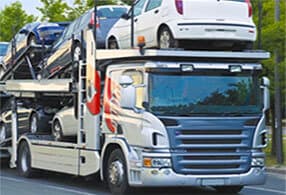
Tag: open-air transport

How To Use The Best Car Transport Quote Calculator

How To Use The Best Car Transport Quote Calculator

Get Your Car Shipping Quote!

How To Use The Best Car Transport Quote Calculator

How To Use The Best Car Transport Quote Calculator

Get Your Car Shipping Quote!

Related Topic Resources

Shipping your car may mean moving it thousands of miles across the country, or simply transporting it a shorter distance in-state or to a neighboring state. Knowing what it will cost can be made easier by using the car shipping calculator that Direct Express Auto Transport first originated in 2004. In this forum, or blog article, we will inform you on how best to apply our unique and best in class car transport quote calculator to your situation.

Key Takeaways: 

  • Avoid online car shipping calculators that require personal information. Don’t let your mobile phone light up or your email inbox fill up. Use a good car transport rate calculator that offers quotes with no personal information.
  • Understand what goes into the pricing of your vehicle shipment. A sedan will be cheaper than a pickup truck, for example.
  • Decide ahead of time if your vehicle should be protected from the elements and go Enclosed. Or if it is no big deal if it gets dirty and can go Open-Air Transport like the overwhelming majority of cars. 
  • Do not order your vehicle shipment too early. A couple weeks in advance is ideal.

In This Blog Article:

How Much Does Car Shipping Cost?

According to our company records, it can cost as little as $300 for small cars going a short distance, to as much as $3,000 for a big pickup going across the country. It all depends. 


The Main Factors That Affect Car Shipping Costs

Because we invented the car transport quote calculator, nobody knows better what goes into calculating instant quotes. Other car shipping companies use a common third rate calculator software that indeed produces a price. But how reliable is another question. And maddeningly, the other competitors often won’t reveal that car shipping cost without you first giving up personal information such as  your email address, phone number, and name.

We don’t do that. Ever. Ours is truly a no personal information instant car transport quote calculator.

We factor certain metrics, including distance, size of vehicle, seasonal fluctuations, operational status, running condition, type of trailer and much more.


Shipping Distance

All car transport companies charge by the mile. You’ll receive a lower rate per mile for vehicle shipments at longer distances, though the overall cost will be higher.

Size of Vehicle

Larger vehicles like pickup trucks, vans, large SUVs and RVs are more expensive to ship than sedans and smaller SUVs. The size of your vehicle is a big factor in the quote engine.

Origination & Destination Locations

Big cities are easier and therefore cheaper than rural areas. It is an important factor.

Type of Trailer – Open or Enclosed

Enclosed transport offers your vehicle more protection during the shipment but at a higher price point than open transport. An enclosed car carrier is often a good choice for shipping luxury and classic cars. However, about 97% of all car shipments go Open-Air Transport because it is cheaper and still safe. The vehicle may arrive a little dirty from the road, but otherwise in the same condition. Just take it to the car wash.

Seasonality

The auto transport industry typically sees higher demand for truck space during the summer, and again briefly in January, which leads to higher prices. Why? Because car shipping is a seasonal business, with higher rates in the summer months (when many families relocate) and in January (when snowbirds fly south for the winter). There is a spike in car shipping demand that gets loaded into the calculator.

Vehicle Condition

Inoperable vehicles are more expensive to ship since they require more resources to transport than those that are in working order. A running car is much easier to load and unload. The carrier driver often needs to reposition his group of vehicles, so if a vehicle is non-running, that’s an issue that needs compensating. Usually $150 to $200 extra for non-operational vehicles.

When Best To Get Car Shipping Estimates

It is not first come … first serve, in the auto transport industry. No, not at all. It is who is paying the most for your size vehicle that gets a spot on the trailer first. Being too early to book might cause problems that you had not anticipated.

Do Not Book Too Far in Advance

One of the biggest mistakes we see are customers who think they are reserving a spot on a trailer, as if they were a seat on a plane, and think ordering their shipment a month in advance is wise. It is not. Nothing actually begins to happen with 99% of vehicle shipments until the week your order is made available. Booking a week or two in advance is ideal.

Get Current Rates For Car Shipping

Some car shipping companies offer guaranteed pricing, but usually at inflated rates so that if the market changes, they won’t get hurt. Most brokers do not guarantee prices because they can’t guarantee what they can’t control.

For instance, car transport pricing spikes dramatically shipping to Florida in December and January. It may even double on some routes. If you book that Florida shipment in October for a December ship date, the price will be likely too low and carriers will be filling their trailers with other higher paying freight, often booked just days in advance. You may sit wondering why your car hasn’t moved? The reason is that you booked too early.


An Auto Transport Broker With Great Google Reviews

An ethical car transport broker will give you the above advice. You can have a pleasant car shipping experience if somebody honest steers you in the right direction. The great thing about Google reviews is that you publicly know who the reviewer is, and that it probably isn’t a competitor taking cheap shots. The BBB is much the same way. Find a broker with outstanding reviews. Like Direct Express Auto Transport.

Car Transport Quote Calculator: The Bottom Line

Direct Express Auto Transport originated the instant quote calculator in 2004. It was nearly four years before a knockoff appeared. We have refined and perfected our quote engine and say confidently that it is by far the best in the car shipping industry.

Car Transport Cost: FAQ

  • Should You Ship Your Car Open or Enclosed?

    About 97% of all vehicle shipments are shipped on an Open Trailer. It’s proven to be a very safe method with statistically very few problems. You may notice new cars being delivered to dealerships in an open trailer, and that’s because it’s safe. If you have a collector car or really expensive automobile, say around $75,000 or more, then we recommend shipping it in an Enclosed Trailer. Expect to pay about 33-50% more for an Enclosed transport. Our auto shipping costs calculator automatically adds the extra enclosed car transport estimate to your quote, so you can experiment with the quotes if you like.
  • How Long Will It Take To Pick Up My Vehicle?

    Over 90% of our orders ship inside of one week. That could be anywhere from 1 to 7 days. Most of the U.S. population lives in a major metropolitan area and is shipping to another well populated area, and that makes a big difference. Cars usually ship in a very regular manner, almost half within just a few days.

    If either your origination or destination locations are away from population centers, in other words, in a remote area, then you might consider meeting a driver in a nearby big city or town to increase your chances of shipping timely. Or adding money to the carrier fee may entice a carrier. Remember, anyone you choose can serve as your point of contact, which takes the stress out of shipping your vehicle.

  • How Do I Prepare My Vehicle For Shipment?

    Clean out your vehicle of all loose items as much as possible. Leave nothing of value in the vehicle. It’s very rare that any items are stolen during transport, but we recommend extra caution to prevent loss.

    Keep extra items as previously discussed to a minimum and place in the trunk or out of sight. Have only about a quarter tank of gasoline. Give the auto transport carrier a set of keys and advise them of any special instructions for your vehicle, like difficulty starting, steering, braking, etc.

    Driver Consideration: Being a truck driver can be a thankless job. They work long hours and are away from their families for weeks at a time. Please be friendly and considerate to our drivers, and they will treat you in the same manner.

  • How Are Car Shipping Quotes Calculated?

    The first factor used to calculate car shipping cost is the transport distance. Next are the length, height and weight of the vehicle, followed by running condition and type of trailer (Open or Enclosed). Finally, seasonal fluctuations may impact the overall cost.

  • Non-Running Vehicles Cost More

    Maneuvering non-operational vehicles on and off a car transport trailer is a big challenge. Car shipping companies much prefer operational (running) vehicles because it gives them an easier option to reposition their entire load. Non-running vehicles take considerably more time to get on and off the trailer. So the car shipping quote must reflect the higher cost. Many auto transporters don’t have a winch and cannot accommodate non-running vehicles. That is one reason it takes longer on average to ship non-operational vehicles. Fewer do it. If at all possible, fixing your vehicle before trying to ship it will save on the non-running car transport cost, and make the process go faster.

  • How Long Does It Take To Deliver My Vehicle?

    Delivering is final step in the process, and also the simplest part. Once your vehicle has been assigned and picked up, not too much can go wrong. Once the vehicle is picked up, you can estimate that it will take roughly 1 day of transit time for every 500 miles distance. Delivery Time Estimate Guide 100-500 miles takes 1 or 2 days 500-1000 miles takes 2 or 3 days 1000-1500 miles takes 3 or 4 days 1500-2000 miles takes 4 or 5 days 2000-2500 miles takes 5 or 6 days 2500-3000 miles takes 6 or 7 days Depending on the distance, weather conditions and population centers it could be a few days or weeks until a vehicle reaches its destination. The carriers usually estimate about 10 days on coast to coast trips, but they frequently arrive earlier.

  • Can I Put Stuff In My Car When I Ship It?

    Yes and no. The strict interpretation is no, you can’t ship items inside your vehicle. The reality is that almost all carriers look the other way on items that weigh less than 100 pounds, roughly the equivalent of 2 suitcases. We recommend placing any additional items in the trunk and out of sight. The U.S. Transportation Law states that a carrier can be fined $10,000 for hauling household items in the vehicle, but it’s rarely enforced. However, the drivers do estimate the weight of each vehicle that they carry and don’t want problems at weight scales. So they must keep the personal items to a minimum. Some drivers will accept a tip ($50-$250) for hauling extra stuff, but some won’t. Rule of thumb, don’t take advantage.

Related Articles

  • Open vs Enclosed Car Transport Service

    Read more

Continue reading

3 Ways Auto Transport Double-Brokering Happens And Why It Matters

3 Ways Auto Transport Double-Brokering Happens And Why It Matters

Get Your Car Shipping Quote!

Reliable Car Shipping Fast & Reputable

3 Ways Auto Transport Double-Brokering Happens And Why It Matters

Get Your Car Shipping Quote!

Related Topic Resources

There has been an escalation of auto transport double-brokering since the pandemic that has become a serious matter for carriers, brokers and customers alike. Everyone in the car shipping industry is harmed when double-brokering happens.

Key Takeaways: 

  • Auto Transport Double-Brokering can result from customer intention, broker cunning, or carrier duplicity. All 3 cause major headaches. 
  • Car transport carriers will shy away from double brokered orders because they can’t count on the vehicle being there. 
  • The best thing to do is for a customer to choose one fully vetted broker. 
  • The broker should not list a vehicle on a load board without a firm order. 
  • A carrier should not job out to a third party, and should deliver the order for which he was hired. 

In This Blog Article:

The 3 Main Ways Double-Brokering In The Auto Transport Industry Happens

  1. A customer intentionally enters an order with multiple brokers, thinking he’s clever, but not realizing that the confusion he creates on a load board is a disincentive for any carrier to choose his vehicle over others listed only once. 
  2. A car shipping broker takes a quote they have given to a customer and without an actual order or customer permission, posts it on a load board, which then collides or competes with an authorized order entered with another broker. 
  3. A car transport carrier accepts an order, called a load, from a broker and instead of doing the job as agreed, secretly reassigns it to an often unwitting 3rd party carrier. 

In this article, tapping into our over 20 years of experience, Direct Express Auto Transport will explain the 3 main ways that double-brokering in car shipping happens and why it matters.


What Happens When Customers Intentionally Double-Broker Auto Transport Orders

There is absolutely nothing wrong with a customer performing due diligence, soliciting competitive quotes, and vetting car shipping brokers for experience, expertise, ethical reputation, and positive reviews. You should do that. 

After proper research, about 95% of customers choose one broker to work with, and that is recommended. 

A small minority of customers, about 5%, will muck up their shipment by intentionally ordering from multiple brokers. They think they are creating a competitive advantage by pitting brokers against one another, but here is what most often happens:

  • The brokers recognize the same vehicle on the load board more than once with multiple brokers. 
  • The year, make & model are the same.
  • The origination and destination cities and zip codes are the same.
  • The type of trailer (open vs enclosed) and operational condition (running or not) are the same. 
  • A carrier will be reluctant to get involved in an uncertain order masked in confusion and will choose loads listed only once. 
  • A carrier would be concerned that if he accepted the order from one of the brokers, that by the time he went to pick up the vehicle, one of the other brokers might have assigned it to a rival carrier who got there first.
  • By getting involved, a carrier risks wasting his time and considerable expense driving fruitlessly to pick up a vehicle that is no longer there. 
  • A carrier that is left holding an empty bag, so to speak, will have also lost the chance at other loads listed only once, and must start over to fill that spot. 
  • A prudent and wise carrier will avoid double-brokered loads and gravitate to those vehicles listed only once. Which means the customer is delayed.
  • A broker knows that “if” a carrier calls any broker for the load, it will be the one offering the highest price.
  • Essentially, the customer guaranteed himself the highest price quoted by all his brokers. 
  • Some brokers will play leap frog on the load board, offering ever higher carrier fees that were never agreed to, in order to attract the first phone call from a carrier, and hoping later to convince the customer to pay it. 
  • By creating a so-called competitive situation with double-brokered (or triple, quadruple or more) brokers, the customer has invited higher pricing and game playing by some brokers. 

If you are a customer who has multi-brokered his order, the ensuing stress and confusion you have caused will likely result in a higher than necessary car shipping cost for you and considerable aggravation along the way. You can’t do it on the sly, because both the brokers and carriers will see it. Put another way, it is usually self defeating.


There Are Two Ways Auto Transport Brokers List Loads Without Customer Permission

Brokers Who Self Harvest Customer Information & Then Double-Broker

  1. Some auto transport brokers take their online website quote requests, or phone calls, and without customer permission such as an order, place the information on a car shipping central load board for any carrier to see. If they get a bite, a positive response from a carrier, the broker can circle back to the potential customer. The posted load board price is often artificially inflated to lure a carrier into calling. Sneaky? Deceptive? You bet.

    However, the customer has chosen another broker to work with and now the cunning auto transport broker has created a double-brokering situation not of the customer’s making. 

    The selected broker with a legitimate order is likely the lower priced of the two, and has little chance of receiving a positive response from any carrier, who will of course choose the higher paying posted fee. The customer is cheated. And so is the preferred broker with a real customer deal.

    Brokers Who Buy Customer Leads & Then Double-Broker

  2. There is a second way a load gets double-brokered by brokers. There are a number of car shipping websites created by companies that are NOT in the car shipping business. The customer lead websites mirror the appearance in almost every way of actual broker sites. 

    The lead websites start off with a quote box that is similar to a real broker site, but string the visitor along into revealing personal information that is not actually necessary to produce a quote. The goal is for those lead generating websites to sell the customer information to auto transport brokers who will buy them. 

    It is easy for a visitor to be fooled. Customers don’t notice words like “partners” or “multiple brokers” or “multiple quotes”. Or even if they did notice, might not understand the meaning. By filling out the form, many visitors don’t realize what will happen next. 

    Here is the information requested on the lead generating auto transport websites:

    • Year, Make & Model … (like a broker)
    • Origination and Destination cities and zip codes … (like a broker)
    • Type of Trailer / Open or Enclosed … (like a broker)
    • Operational Condition / running or not … (like a broker)
    • First Available Shipping Date … (like a broker)
    • Name 
    • Email Address 
    • Phone Number 

    The masquerading auto transport websites that are in reality lead generators will instantly sell your personal information to several brokers at roughly $2 each. They must have at least an email address and preferably also a phone number so the brokers have a way to reach the prospective customer.

Since the lead provider will have anywhere from 3 to 10 broker clients per lead, the seller will make anywhere from $6 to $20 on each visitor to their site without lifting a finger. It is automatic. And legal, in case you’re wondering.

Your email inbox will be inundated with broker quotes. Follow up emails will pour in for weeks.

Your mobile phone will ring incessantly with phone calls from brokers who paid $2 to get your information.


What Do Some Brokers Do With Their Customer Leads?

Here’s what many brokers do with your information, regardless of whether you ever communicated with them, much less placed an order:

  • List the lead information on a Load Board, which is unethical and against the load board’s policy of listing only contracted orders. It creates double-brokering.
  • The broker will check to see how many other brokers have listed the same vehicle shipment and at what price?
  • If other brokers have a higher carrier fee, they will refresh their listing without prior customer approval to a higher price, so as to win. They know the highest carrier fee usually gets the first carrier phone call for acceptance.

Common Auto Transport Broker Tricks When Double Listing A Load

Many auto transport brokers who list loads without permission, call it double-brokering, try to create plausible deniability to stay out of trouble with the load board. What they are doing is against the rules and they know it. Here are some of the games they play.

Notice the double-brokering culprit may create plausible deniability by changing ever so slightly the model of the vehicle, and one or more zip codes. 

In most cases, everything is unabashedly the same, save the carrier fee, which is usually higher. But even if the listed carrier fee is lower, the fact that the load is listed twice or more, might cause a carrier to avoid it altogether. Harm is done to the customer.


How Does A Carrier Know Whether A Broker Has A Contract?

A tell-tale sign for most carriers is when they call a broker to request a listing on the load board, and the broker’s dispatcher puts him on hold. That usually doesn’t happen when the broker has a contract with the customer. The carrier suspects that the broker they called is scrambling to contact the prospective customer, because they don’t have a deal yet, to negotiate a likely higher order total. And the carrier can see the load is double-brokered. 

The broker is probably on the other line to the customer, if he/she answered, and is asking, “Hey Customer, we have a carrier that can transport your vehicle for $200 more, do you want to do it?” The customer does not know whether the carrier in question would have called the broker they hired, and for less, if not for the double-brokering intruder. 


A Third Method: How Carriers Double-Broker

So far we have explored how some customers and some auto transport brokers double-broker vehicle shipments. There is a third nemesis when it comes to it, and that is the carriers themselves, or at least a small minority of them. Less than 10% of all orders are double-brokered according to our analysis of a popular load board. 


What Is Carrier Double Brokering?

A small minority of carriers will search on a load board for above average carrier fees, and knowing the market rate as they do, contact the broker for assignment, thus removing the listing from the board. Then the assigned carrier will repost it, as if the original broker, and reassign the load to an often unwitting third party carrier for a lesser amount. The double-brokering carrier pockets the difference without ever performing the task for which they alone were hired, and contractually agreed to do. 

You need a scorecard to keep track of it.

Sometimes the double-brokering carrier does not repost the load on the same board, but instead, finds a rival board to post the load in search of an unwitting third party carrier. And sometimes they simply know of another carrier to solicit.

The practice of carriers jobbing out loads to other carriers is almost always against the contractual agreement with the original broker. And for good reason. 

  • Perhaps the third party carrier has a poor reputation for service and the original broker would never have hired them in the first place.
  • The original broker, having been duped, does not know who has his customer’s vehicle, and cannot get status reports.
  • If physical damage to the vehicle occurs, the assigned carrier and his third party carrier may squabble about who is liable and whose insurance is to pay. 
  • The broker, if he collected the full amount upfront, will likely pay the assigned carrier his fee, who then might not pay the third party carrier, who unwittingly risked getting stiffed.

The Bottom Line: Double-Brokering by Either Customers, Brokers Or Carriers Causes Confusion, Time, Money & Stress

Fortunately, less than 10% of all vehicle listings are double-brokered. Things could be worse. 


Unfortunately, the auto transport double-brokering orders that are listed on load boards end up costing everyone involved all sorts of problems. From benign annoyances that cost time to unravel, to inflated carrier fees passed on to the customer, to legal ramifications when damages occur, to third party carriers not getting paid. 


Direct Express Auto Transport has been an innovative leader in the car shipping industry since 2004. We originated the instant quote calculator, which is now commonplace throughout the industry. We hasten to add that our quote engine is proprietary and still the best. 


We do not buy leads and only post loads with a completed order. Therefore, we do not double-broker. Ever. Carriers, and even our competitors, know that. 

Car Transport Cost: FAQ

  • Should You Ship Your Car Open or Enclosed?

    About 97% of all vehicle shipments are shipped on an Open Trailer. It’s proven to be a very safe method with statistically very few problems. You may notice new cars being delivered to dealerships in an open trailer, and that’s because it’s safe. If you have a collector car or really expensive automobile, say around $75,000 or more, then we recommend shipping it in an Enclosed Trailer. Expect to pay about 33-50% more for an Enclosed transport. Our auto shipping costs calculator automatically adds the extra enclosed car transport estimate to your quote, so you can experiment with the quotes if you like.
  • How Long Will It Take To Pick Up My Vehicle?

    Over 90% of our orders ship inside of one week. That could be anywhere from 1 to 7 days. Most of the U.S. population lives in a major metropolitan area and is shipping to another well populated area, and that makes a big difference. Cars usually ship in a very regular manner, almost half within just a few days.

    If either your origination or destination locations are away from population centers, in other words, in a remote area, then you might consider meeting a driver in a nearby big city or town to increase your chances of shipping timely. Or adding money to the carrier fee may entice a carrier. Remember, anyone you choose can serve as your point of contact, which takes the stress out of shipping your vehicle.

  • How Do I Prepare My Vehicle For Shipment?

    Clean out your vehicle of all loose items as much as possible. Leave nothing of value in the vehicle. It’s very rare that any items are stolen during transport, but we recommend extra caution to prevent loss.

    Keep extra items as previously discussed to a minimum and place in the trunk or out of sight. Have only about a quarter tank of gasoline. Give the auto transport carrier a set of keys and advise them of any special instructions for your vehicle, like difficulty starting, steering, braking, etc.

    Driver Consideration: Being a truck driver can be a thankless job. They work long hours and are away from their families for weeks at a time. Please be friendly and considerate to our drivers, and they will treat you in the same manner.

  • How Are Car Shipping Quotes Calculated?

    The first factor used to calculate car shipping cost is the transport distance. Next are the length, height and weight of the vehicle, followed by running condition and type of trailer (Open or Enclosed). Finally, seasonal fluctuations may impact the overall cost.

  • Non-Running Vehicles Cost More

    Maneuvering non-operational vehicles on and off a car transport trailer is a big challenge. Car shipping companies much prefer operational (running) vehicles because it gives them an easier option to reposition their entire load. Non-running vehicles take considerably more time to get on and off the trailer. So the car shipping quote must reflect the higher cost. Many auto transporters don’t have a winch and cannot accommodate non-running vehicles. That is one reason it takes longer on average to ship non-operational vehicles. Fewer do it. If at all possible, fixing your vehicle before trying to ship it will save on the non-running car transport cost, and make the process go faster.

  • How Long Does It Take To Deliver My Vehicle?

    Delivering is final step in the process, and also the simplest part. Once your vehicle has been assigned and picked up, not too much can go wrong. Once the vehicle is picked up, you can estimate that it will take roughly 1 day of transit time for every 500 miles distance. Delivery Time Estimate Guide 100-500 miles takes 1 or 2 days 500-1000 miles takes 2 or 3 days 1000-1500 miles takes 3 or 4 days 1500-2000 miles takes 4 or 5 days 2000-2500 miles takes 5 or 6 days 2500-3000 miles takes 6 or 7 days Depending on the distance, weather conditions and population centers it could be a few days or weeks until a vehicle reaches its destination. The carriers usually estimate about 10 days on coast to coast trips, but they frequently arrive earlier.

  • Can I Put Stuff In My Car When I Ship It?

    Yes and no. The strict interpretation is no, you can’t ship items inside your vehicle. The reality is that almost all carriers look the other way on items that weigh less than 100 pounds, roughly the equivalent of 2 suitcases. We recommend placing any additional items in the trunk and out of sight. The U.S. Transportation Law states that a carrier can be fined $10,000 for hauling household items in the vehicle, but it’s rarely enforced. However, the drivers do estimate the weight of each vehicle that they carry and don’t want problems at weight scales. So they must keep the personal items to a minimum. Some drivers will accept a tip ($50-$250) for hauling extra stuff, but some won’t. Rule of thumb, don’t take advantage.

Related Articles

  • Open vs Enclosed Car Transport Service

    Read more

Continue reading

The Ultra-Wealthy Ship Their Cars Overseas By Plane

The Ultra-Wealthy Ship Their Cars Overseas By Plane

Get Your Car Shipping Quote!

Reliable Car Shipping Fast & Reputable

The Ultra-Wealthy Ship Their Cars Overseas By Plane

Get Your Car Shipping Quote!

Related Topic Resources

We read with great interest an incredible CNN article in June 2024 about how the ultra-wealthy ship their luxury cars overseas by plane. Absolutely fascinating and mind boggling to see how super rich people don’t flinch at spending tens of thousands of dollars to transport a car overseas or long distances.

Key Takeaways: 

  • Oil rich barrons in the Middle East Gulf states, notably Dubai, use specialized luxury car shipping services to fly vehicles to London, Europe and elsewhere.
  • Ultra-Wealthy Europeans and Americans will do the same without batting an eye.
  • A typical car transport by air from Dubai to London might cost around $36,000.

In This Blog Article:

In this blog article, Direct Express Auto Transport shares our expertise, honed over 20 years experience as a leading vehicle transport company, to comment about luxury car shipping services by plane.

Rich People Shipping Their Cars By Plane

You could buy a new midsize sedan, like a Toyota Camry, for about the same price as you would pay to ship a car by plane from the Middle East Gulf states to London, England. According to Dan Car Logistics, something like that might cost roughly $36,000 to transport. A hefty and extravagant sum of money for the average person, but not a concern to the super rich. Dan Car Logistics reports they arrange car shipping by air about 100 times a year, which is a tad less than 10 times per month.


Specialized Car Shipping Logistics

A luxury vehicle like a Porsche Carrera GT can cost close to $1.9 million. It obviously should be protected not only from the elements such as inclement weather, but also from possible mishaps and damage during transport. It is loaded onto a small enclosed one car trailer, so that it is totally protected, and towed on and off an aircraft. 

Dan Car Logistics uses both commercial planes, which is like buying a ticket for your car, and also uses private cargo planes, which can be substantially more expensive. Either method hides the luxury car from prying eyes, and helps ensure against theft or damage. 


The Difficulty Of Car Shipping Internationally

A luxury vehicle like a Porsche Carrera GT can cost close to $1.9 million. It obviously should be protected not only from the elements such as inclement weather, but also from possible mishaps and damage during transport. It is loaded onto a small enclosed one car trailer, so that it is totally protected, and towed on and off an aircraft. 

The Customs Vehicle Shipping Paperwork and Process

It is a specialized business, Customs Brokers, who are expert at navigating the laws and requirements of a host of countries. It is not something regular U.S. Auto Transport Brokers are proficient at doing. It is time consuming, arduous, expensive, and sometimes maddening. A good customs broker like Crowley, or the aforementioned Dan’s Logistics, spend years perfecting their craft. 

A good international car shipping broker needs to verify all the paperwork. Then a customs officer will check what fees are due, and to do that, they must ascertain the value of the vehicle. Sometimes taxes are still outstanding and must be paid in advance. The same applies to duties. And after everything is in order, every i dotted, every t crossed, the customs vehicle shipping broker will release the car and off it goes.


The Bottom Line: Most U.S. Car Shipping Brokers Don’t Arrange International Orders

It should come as no surprise, given the level of expertise required to ship cars internationally, that most U.S. auto transport brokers stick to domestic vehicle shipping in the mainland, Hawaii and Alaska. Here at Direct Express Auto Transport, we ship exclusively in the 48 contiguous states and point international vehicle shippers to seasoned customs brokers.

Car Transport Cost: FAQ

  • Should You Ship Your Car Open or Enclosed?

    About 97% of all vehicle shipments are shipped on an Open Trailer. It’s proven to be a very safe method with statistically very few problems. You may notice new cars being delivered to dealerships in an open trailer, and that’s because it’s safe. If you have a collector car or really expensive automobile, say around $75,000 or more, then we recommend shipping it in an Enclosed Trailer. Expect to pay about 33-50% more for an Enclosed transport. Our auto shipping costs calculator automatically adds the extra enclosed car transport estimate to your quote, so you can experiment with the quotes if you like.
  • How Long Will It Take To Pick Up My Vehicle?

    Over 90% of our orders ship inside of one week. That could be anywhere from 1 to 7 days. Most of the U.S. population lives in a major metropolitan area and is shipping to another well populated area, and that makes a big difference. Cars usually ship in a very regular manner, almost half within just a few days.

    If either your origination or destination locations are away from population centers, in other words, in a remote area, then you might consider meeting a driver in a nearby big city or town to increase your chances of shipping timely. Or adding money to the carrier fee may entice a carrier. Remember, anyone you choose can serve as your point of contact, which takes the stress out of shipping your vehicle.

  • How Do I Prepare My Vehicle For Shipment?

    Clean out your vehicle of all loose items as much as possible. Leave nothing of value in the vehicle. It’s very rare that any items are stolen during transport, but we recommend extra caution to prevent loss.

    Keep extra items as previously discussed to a minimum and place in the trunk or out of sight. Have only about a quarter tank of gasoline. Give the auto transport carrier a set of keys and advise them of any special instructions for your vehicle, like difficulty starting, steering, braking, etc.

    Driver Consideration: Being a truck driver can be a thankless job. They work long hours and are away from their families for weeks at a time. Please be friendly and considerate to our drivers, and they will treat you in the same manner.

  • How Are Car Shipping Quotes Calculated?

    The first factor used to calculate car shipping cost is the transport distance. Next are the length, height and weight of the vehicle, followed by running condition and type of trailer (Open or Enclosed). Finally, seasonal fluctuations may impact the overall cost.

  • Non-Running Vehicles Cost More

    Maneuvering non-operational vehicles on and off a car transport trailer is a big challenge. Car shipping companies much prefer operational (running) vehicles because it gives them an easier option to reposition their entire load. Non-running vehicles take considerably more time to get on and off the trailer. So the car shipping quote must reflect the higher cost. Many auto transporters don’t have a winch and cannot accommodate non-running vehicles. That is one reason it takes longer on average to ship non-operational vehicles. Fewer do it. If at all possible, fixing your vehicle before trying to ship it will save on the non-running car transport cost, and make the process go faster.

  • How Long Does It Take To Deliver My Vehicle?

    Delivering is final step in the process, and also the simplest part. Once your vehicle has been assigned and picked up, not too much can go wrong. Once the vehicle is picked up, you can estimate that it will take roughly 1 day of transit time for every 500 miles distance. Delivery Time Estimate Guide 100-500 miles takes 1 or 2 days 500-1000 miles takes 2 or 3 days 1000-1500 miles takes 3 or 4 days 1500-2000 miles takes 4 or 5 days 2000-2500 miles takes 5 or 6 days 2500-3000 miles takes 6 or 7 days Depending on the distance, weather conditions and population centers it could be a few days or weeks until a vehicle reaches its destination. The carriers usually estimate about 10 days on coast to coast trips, but they frequently arrive earlier.

  • Can I Put Stuff In My Car When I Ship It?

    Yes and no. The strict interpretation is no, you can’t ship items inside your vehicle. The reality is that almost all carriers look the other way on items that weigh less than 100 pounds, roughly the equivalent of 2 suitcases. We recommend placing any additional items in the trunk and out of sight. The U.S. Transportation Law states that a carrier can be fined $10,000 for hauling household items in the vehicle, but it’s rarely enforced. However, the drivers do estimate the weight of each vehicle that they carry and don’t want problems at weight scales. So they must keep the personal items to a minimum. Some drivers will accept a tip ($50-$250) for hauling extra stuff, but some won’t. Rule of thumb, don’t take advantage.

Related Articles

  • Open vs Enclosed Car Transport Service

    Read more

Continue reading

Tips For Shipping A Car Across Country

Tips For Shipping A Car Across Country

Get Your Car Shipping Quote!

Tips For Shipping A Car Across Country

Tips For Shipping A Car Across Country

Get Your Car Shipping Quote!

Related Topic Resources

The best tips for shipping a car across country will save you time, money and aggravation. Like most everything else of consequence, careful planning will keep you out of trouble. You should approach shipping a car like you would your travel itinerary, mapping out each step in the process and anticipating contingencies.

Key Takeaways: 

  • You want the most current auto transport pricing. So book your order no sooner than 3 weeks before you want it delivered.
  • The actual transit time on the road is about one day for every 500 miles distance, plus one or two days for carrier loading and unloading. Most cross-country vehicle shipments take 7-10 days, sometimes longer.
  • You are competing with other customers for space on a car transport carrier. The highest paying orders ship first regardless of when the order is placed.

In This Blog Article:

In this blog article, Direct Express Auto Transport shares our expertise, honed over 20 years experience as a leading vehicle transport company, to inform you on what it takes to successfully ship a car across the country.

How Many People Are Shipping A Car Across Country?

Cross country car shipping is something people will do only once or twice in their lifetime, and many not at all. For whatever reason, frequent moves, collecting cars or buying and selling vehicles as a business venture, there are people who ship cars on a regular basis. But they are the minority.

Direct Express Auto Transport researched recent New Jersey vehicle shipments on a popular carrier load board, and found only 14% were shipping a car across country, over 2,000 miles. 

However, the same research for California vehicle shipments revealed that 51% were shipping a car cross country (over 2,000 miles). It makes sense because there are so many more states with higher populations nearer New Jersey than California. On any given day, there are several thousand vehicles shipping across country, and during peak periods it can rise to over ten thousand vehicles.


Best Tips For Shipping A Car Across Country

  • Book your order no sooner than 3 weeks before you want it delivered.

Why? Because you want only current market pricing. Booking too early is often a mistake because auto transport costs change every month. Book your order at too low a price and your order may struggle to ship. 

  • Book your order no later than 2 weeks before you want it delivered.

Why? Because it takes several days in transit to ship your car across the country. But it may also take several days, especially if you opted for the lowest Standard Rate and did not select Expedited Rate, to even find or assign a carrier to haul your vehicle. 

  • Remember that you are competing with other customers for space on a car transport carrier. You have not reserved a spot on a carrier even if booking early. Highest paying orders ship first regardless of when the order is placed. 

Why? Customers place orders with auto transport brokers, who then communicate with vehicle shipping carriers. The carriers have no idea and do not concern themselves with when a customer booked an order, nor how long they have been waiting to ship. Carriers choose the highest paying orders. Period. 

  • Plan on a coast to coast vehicle shipment taking 8-10 days on the road. Also plan on a broker taking 1-8 days to find a carrier to transport your vehicle. 
  1. The fastest time frame might be around 9 days start to finish.
  2. It is not unusual for the time frame to be around 18 days start to finish. 
  3. Most orders are somewhere between 9 and 18 days from start to finish.
  4. Adding money by selecting either the Expedited or Rush rate service usually makes the experience go faster and smoother.

  • Sometimes nothing works to get an order shipped in a timely fashion. Or at all. Here’s why:

  1. Because either the origin or destination location is very remote and no carrier is planning on making that run. 

  2. Because the vehicle is too big and intrudes on a second or even third space and there isn’t enough money to compensate the carrier.
  3. Because sometimes the customer booked way too early at too low a price for the current market. 
  4. Because sometimes the broker made a mistake in pricing, and set the order too low, below current market rates. 
  5. Because sometimes the vehicle is non-running and the carriers are so busy with plenty of running cars that they don’t want to hassle with it. 
  6. Because there is something unusual or too difficult with the vehicle, such as extremely low ground clearance (4 inches or less) and should go Enclosed Transport, not Open-Air Carrier. 
  7. Or is extremely old and might fall apart on the road. 
  8. Or is extremely expensive and the carrier is afraid of the liability. 
  • Have a backup contact at either the origin or destination.

Why? Because shipping a car from yourself to yourself is extremely difficult. Everything has to go perfect for it to work. And the word “perfect” is rarely applied to the unscientific auto transport industry. Having a backup contact at either end helps alleviate stress for everybody. 

  • Speaking of tips, the carrier driver transporting your car will do far more for you than any waiter in a restaurant, whom you probably tip nicely. A car transport driver who takes good care of your vehicle probably deserves a $50-$100 tip, don’t you think?

What Method Do You Ship A Car Coast to Coast?

There are five methods for shipping a car across country, or coast to coast. But really, only two that are popular. The other three are simply possibilities.

By far, the two most popular car shipping methods are by truck – Open Carrier and Enclosed Carrier.

  • Open Car Transport Trucks / Over 95% of all vehicle shipping is done by Open-Air Carrier. The same kind of trucks you see on the highway delivering new vehicles to dealerships. It is relatively safe, which is why car manufacturers use it, and also a cheap and reliable method. 
  • Enclosed Car Transport Trucks / About 3% of all vehicle shipping are done in an Enclosed Carrier. The beauty of that is the protection it affords from inclement weather, storms, hail, dirt and so on. Expensive vehicles or collector cars often use Enclosed Carrier. It is about 35-50% more costly than Open Carrier.
  • Rail Vehicle Shipping / A very small percentage of people ship their car by rail. Think of it as snail mail. It often takes the better part of a month to drop off a car at a rail station for across country car shipping. It is a very cheap method, but can be frustrating for a customer logistically. We don’t recommend it for the general public, but it can be a good economical decision for a business with a fleet of cars.
  • Ocean Car Shipping / Like rail vehicle shipping, ocean car shipping can be an affordable method, but it too can take a long time. If shipping a car to or from Hawaii or Alaska, it makes plenty of sense. Here’s a good tip for a Hawaiian car shipper, Matson

Air Auto Shipping / It probably is not on your radar because the cost of it is so over the top, but some people actually fly their car across country. Must be nice to have the bucks to do that, right? For the general public, it’s hardly worth mentioning.


What Do 5 Car Shipping Methods Cost?

A good example would be Los Angeles, California to Philadelphia, Pennsylvania, because both those cities have all five elements available: Open-Air Carrier, Enclosed Car Transport, Rail Vehicle Shipping, a port for Ocean Shipping, and finally a major airport for flying a vehicle. 

Here is the average price for all five car shipping methods:

  • Open Car Transport Trucks / $1,494 total cost 
  • Enclosed Car Transport Trucks / $2,299 total cost 
  • Rail Vehicle Shipping / A very small percentage of people ship their car by rail. Think of it as snail mail. It often takes the better part of a month to drop off a car at a rail station for across country car shipping. It is a very cheap method, but can be frustrating for a customer logistically. We don’t recommend it for the general public, but it can be a good economical decision for a business with a fleet of cars.
  • Ocean Car Shipping / $3,091 total cost / Takes two steps Philadelphia to Honolulu: $1,494 Open-Air Carrier Philadelphia to L.A.. Plus $1,597 Los Angeles to Honolulu, Hawaiian car shipper, Matson.
  • Air Auto Shipping / $5,000 total cost

The Time It Takes To Ship A Car Across The USA?

Waiting for a carrier assignment can sometimes take as long or longer than the actual car shipment. Adding additional sums will likely cut down on the wait time for a carrier. Here is an average: 

Car Shipping Across Country / 3,000 miles

  • 1-8 days for your broker to assign a carrier
  • 2 days for carrier pick up
  • 1 day for carrier to load all his vehicles
  • 7-9 days in transit / on the road
  • 1 day for carrier to unload all his vehicles

Total 10-21 days from start to finish for an average vehicle shipment order. Includes everything.


Prepare Your Vehicle For Shipping

Before your car is shipped, it’s a good idea to clean it thoroughly. It will not only make your vehicle look better, but it will also help to identify any existing damage that may need attention. When cleaning your car, please take photos of any scratches, dents, or other imperfections so you can document their existence before shipping.

Remove Personal Items From Your Car

Remove personal items from your car before it is shipped, including GPS devices, cell phones, and other things you wouldn’t want to leave in your vehicle during transit. 

Additionally, remove any after-market additions, such as spoilers or roof racks, as they can quickly become damaged during transit. 

Do not keep any valuable items in your vehicle. Remember that the carrier is responsible only for your car, not for any additional items you have confined to your trunk. Rarely is anything stolen during car transport, but why tempt?

Secure Loose Parts On the Vehicle

Before vehicle shipping, secure any loose parts on your car. That includes items like antennas, hood ornaments, and mirrors. 

Provide Detailed Vehicle & Contact Information

When preparing for car shipping, it’s crucial to provide your car shipping company with detailed information about your car. That includes information about its make, model, and year, as well as its current condition. Additionally, be sure to provide the company with information about your pick-up and delivery locations and your desired shipping dates.

Only A Quarter Tank Of Gas

Carriers prefer only about a quarter tank of gas in the vehicle, so it’s good to have that in mind upon placing your order. The fuel in your tank is unnecessary extra weight, and too much might spill onto other vehicles.

Vehicle Shipping Contacts Arranged

If you can’t be present at either end of the car shipment, please designate someone else to inspect the vehicle with the driver. 

Disable Alarms and Security Systems

Before shipping your car, disable any alarms and security systems. That will prevent the alarm from sounding during transport and causing a disturbance.

Check Your Vehicle’s Other Fluids

Check your car’s fluids, such as oil and coolant, to ensure they are at the proper levels. If the levels are low, add more liquid to ensure your car runs smoothly during transport.

Check Your Tires

Check the tires on your car to ensure they have the proper air pressure and are in good condition. If the tires are too worn or damaged, replace them before shipping. Loading a car with low air pressure or flat tires is very difficult.


The Bottom Line On Shipping A Car Across Country

  • You want the most current vehicle transport market pricing. Booking your order no sooner than 3 weeks before you want it delivered keeps you from having too low a quote, or on the other hand, from paying too high a price.
  • The actual transit time on the road is about one day for every 500 miles distance, plus one or two days for carrier loading and unloading. Most cross-country vehicle shipments take 7-10 days, sometimes longer. A good average is 14 days, or 2 weeks.
  • Car shipping is not first come, first serve. You are actually competing with other customers for space on an auto transport carrier. The highest paying orders will undoubtedly ship first regardless of when the order is placed. When in doubt, add a little more.

Car Transport Cost: FAQ

  • Should You Ship Your Car Open or Enclosed?

    About 97% of all vehicle shipments are shipped on an Open Trailer. It’s proven to be a very safe method with statistically very few problems. You may notice new cars being delivered to dealerships in an open trailer, and that’s because it’s safe. If you have a collector car or really expensive automobile, say around $75,000 or more, then we recommend shipping it in an Enclosed Trailer. Expect to pay about 33-50% more for an Enclosed transport. Our auto shipping costs calculator automatically adds the extra enclosed car transport estimate to your quote, so you can experiment with the quotes if you like.
  • How Long Will It Take To Pick Up My Vehicle?

    Over 90% of our orders ship inside of one week. That could be anywhere from 1 to 7 days. Most of the U.S. population lives in a major metropolitan area and is shipping to another well populated area, and that makes a big difference. Cars usually ship in a very regular manner, almost half within just a few days.

    If either your origination or destination locations are away from population centers, in other words, in a remote area, then you might consider meeting a driver in a nearby big city or town to increase your chances of shipping timely. Or adding money to the carrier fee may entice a carrier. Remember, anyone you choose can serve as your point of contact, which takes the stress out of shipping your vehicle.

  • How Do I Prepare My Vehicle For Shipment?

    Clean out your vehicle of all loose items as much as possible. Leave nothing of value in the vehicle. It’s very rare that any items are stolen during transport, but we recommend extra caution to prevent loss.

    Keep extra items as previously discussed to a minimum and place in the trunk or out of sight. Have only about a quarter tank of gasoline. Give the auto transport carrier a set of keys and advise them of any special instructions for your vehicle, like difficulty starting, steering, braking, etc.

    Driver Consideration: Being a truck driver can be a thankless job. They work long hours and are away from their families for weeks at a time. Please be friendly and considerate to our drivers, and they will treat you in the same manner.

  • How Are Car Shipping Quotes Calculated?

    The first factor used to calculate car shipping cost is the transport distance. Next are the length, height and weight of the vehicle, followed by running condition and type of trailer (Open or Enclosed). Finally, seasonal fluctuations may impact the overall cost.

  • Non-Running Vehicles Cost More

    Maneuvering non-operational vehicles on and off a car transport trailer is a big challenge. Car shipping companies much prefer operational (running) vehicles because it gives them an easier option to reposition their entire load. Non-running vehicles take considerably more time to get on and off the trailer. So the car shipping quote must reflect the higher cost. Many auto transporters don’t have a winch and cannot accommodate non-running vehicles. That is one reason it takes longer on average to ship non-operational vehicles. Fewer do it. If at all possible, fixing your vehicle before trying to ship it will save on the non-running car transport cost, and make the process go faster.

  • How Long Does It Take To Deliver My Vehicle?

    Delivering is final step in the process, and also the simplest part. Once your vehicle has been assigned and picked up, not too much can go wrong. Once the vehicle is picked up, you can estimate that it will take roughly 1 day of transit time for every 500 miles distance. Delivery Time Estimate Guide 100-500 miles takes 1 or 2 days 500-1000 miles takes 2 or 3 days 1000-1500 miles takes 3 or 4 days 1500-2000 miles takes 4 or 5 days 2000-2500 miles takes 5 or 6 days 2500-3000 miles takes 6 or 7 days Depending on the distance, weather conditions and population centers it could be a few days or weeks until a vehicle reaches its destination. The carriers usually estimate about 10 days on coast to coast trips, but they frequently arrive earlier.

  • Can I Put Stuff In My Car When I Ship It?

    Yes and no. The strict interpretation is no, you can’t ship items inside your vehicle. The reality is that almost all carriers look the other way on items that weigh less than 100 pounds, roughly the equivalent of 2 suitcases. We recommend placing any additional items in the trunk and out of sight. The U.S. Transportation Law states that a carrier can be fined $10,000 for hauling household items in the vehicle, but it’s rarely enforced. However, the drivers do estimate the weight of each vehicle that they carry and don’t want problems at weight scales. So they must keep the personal items to a minimum. Some drivers will accept a tip ($50-$250) for hauling extra stuff, but some won’t. Rule of thumb, don’t take advantage.

Related Articles

  • Open vs Enclosed Car Transport Service

    Read more

Continue reading

How Long Does It Take To Ship A Car

How Long Does It Take To Ship A Car

Get Your Car Shipping Quote!

How Long Does It Take To Ship A Car Mobile

How Long Does It Take To Ship A Car

Get Your Car Shipping Quote!

Related Topic Resources

In the auto transport industry, it is not who gets in line first, but rather, who is paying the most on the route with a similar sized vehicle? Like everybody else, car transport carriers are running a business and seek to maximize profit, and they cater to the bottom line. Like it or not, every customer is competing for space on a car shipping trailer. There is such a thing as cheap auto shipping, but only if there is nobody else paying more nearby. 

Key Takeaways:

  • How long it takes to ship a car has mostly to do with price. The carrier fee is paramount, with vehicles shipping faster the higher the price. 
  • The actual transit time on the road is about one day for every 500 miles distance, plus one or two days for carrier loading and unloading. 
  • The car shipping price affects how many days it takes to secure a carrier, then add a few days after assignment for the actual pick up.

In This Blog Article:

In this blog article, Direct Express Auto Transport shares our expertise, honed over 20 years experience as a leading car shipping company, to inform you on what it takes to transport a car successfully.

How Long Does Car Shipping Take?

Step one is the right price to get assigned a carrier. It can make a big difference. Generally speaking, auto transport brokers do not know upon receiving an order, which of the nearly 10,000 car transport carriers will be shipping the vehicle. Broker experience and ethics are important when it comes to proper market pricing of vehicles. 

How long car shipping takes starts with the right price in order to get the customer vehicle assigned to a carrier. Priced right and carrier assignment can happen quickly, as in a day or two, or at minimum a few days. Priced too cheap and the customer may wait a week or even longer to be assigned a carrier. 


How Long Does It Take For The Car Transport Carrier Pick Up?

The good news is that once a car transport carrier has been assigned to ship your vehicle, things usually happen quickly. Expect one of the following after assignment:

  1. Most carriers pick up the vehicle one day after assignment..
  2. Sometimes carriers pick up the vehicle in two days.
  3. Sometimes carriers pick up the vehicle the same day as assigned.
  4. Occasionally, carriers pick up the vehicle in three days.
  5. Rarely do carriers pick up the vehicle in four days or more after being assigned.

How Long Does Car Shipping Transit Take?

A single auto transport driver will typically traverse about 500 miles per day. So how far is your vehicle shipment? Do the math and add one or two days for the carrier driver loading and unloading at either end. Here are a few examples, or scenarios, and see if any closely resemble your situation.

Miles

Route

Trailer

Load/Unload

In Transit

Total Days

284

Chi – Det

3-car

1 day

1 day

2 days

754

SF – Pho

5-car

1 day

2 days

3 days

1211

Cin – San A

7-car

2 days

3 days

5 days

1851

Bos – Hou

9-car

2 days

4 days

6 days

2530

Mia – LV

10-car

2 days

5 days

7 days

2716

LA – Phil

10-car

2 days

6 days

8 days

3274

Sea – Ft L

11-car

2 days

7 days

9 days

We are assuming, of course, that there are no hiccups. That everything goes smoothly.

The Car Shipping Carrier Fee Is The #1 Key Factor

Waiting for a carrier assignment can take as long or longer than the actual car shipment. Think of walking, jogging, or running. Here are three vehicle shipment pricing scenarios for an average 1,500 mile route.

Cheap Auto Transport / Low Pricing

  • 7 days for broker to assign a carrier
  • 2 days for carrier pick up
  • 1 day for carrier to load all his vehicles
  • 3 days in transit / on the road
  • 1 day for carrier to unload all his vehicles

Total 14 days from start to finish for Cheap Auto Transport.

Expedited Car Shipping / $100-$200 Additional

  • 3 days for broker to assign a carrier
  • 2 days for carrier pick up
  • 1 day for carrier to load all his vehicles
  • 3 days in transit / on the road
  • 1 day for carrier to unload all his vehicles

Total 10 days from start to finish for Expedited Car Shipping.

Rush Vehicle Shipping / $300-$400 Additional

  • 1 days for broker to assign a carrier
  • 2 days for carrier pick up
  • 1 day for carrier to load all his vehicles
  • 3 days in transit / on the road
  • 1 day for carrier to unload all his vehicles

Total 8 days from start to finish for Rush Vehicle Shipping.

The extra money on the carrier fee hastens the search for assignment. It shortens the wait for assignment, which is really the only part of the car shipping process that can be speeded up. Every other aspect is what it is. You can’t speed up the loading or unloading. The number of days on the road is governed by the FMCSA. The drivers cannot legally go faster in transit. 

That leaves only the time it takes for a broker to find a carrier to assign. Money has a lot to do with the speed of that.


Other Factors That Affect How Long It Takes To Ship A Car

There are other things that may affect how long it takes to ship a car. While the carrier fee, or money, is paramount, here are other considerations.

Car Shipping Route

The unpopularity of a car shipping route can affect the number of days it takes to assign a driver. Think of it this way:

  • Fast Popular Route: Detroit to Dallas
  • Medium Route: Lansing to Dallas
  • Slower Route: Lansing to Lubbock
  • Extremely Slow Route: Cadillac, MI to Lubbock

Involving a rural location on either end of the vehicle shipment will likely slow things down. The remedy is to add more money to entice a carrier. Patience becomes important.

Type of Vehicle

Sedans ship faster than SUVs, which ship faster than Pick-Up Trucks

Smaller SUVs ship faster than big SUVs. 

And smaller Pick-Up Trucks ship faster than big Pick-Up Trucks.

Carrier Driver Hours of Operation

The Department of Transportation correctly keeps drivers safer, and the public too. We share the road with truck drivers, and we all need them to get plenty of rest. No nodding off on the road. Here are the FMCSA rules.

Seasonality

How long it takes to ship a car is also affected by the time of year, the seasons. In the northern states and Rocky Mountains, the warmer weather months are far easier to car ship than in the winter months. In the winter, in the north, count on it taking longer regardless of the carrier fee.

Stormy Weather

Bad weather will slow car shipments down. Especially hurricanes. Icy conditions in southern states will cause havoc as they are simply not used to it. Tornadoes and arctic storms will also slow things. 

In recent years, global climate change that causes huge fires in the western states will derail car shipping schedules.


The Bottom Line On How Long It Takes To Ship a Car

Shipping a car is not like overnighting a package. It is not nearly as predictable. About the only thing a customer can do is reduce the wait time for a carrier assignment, because everything else is on autopilot. To make vehicle shipments go faster is simple, just add money.

Car Transport Cost: FAQ

  • Should You Ship Your Car Open or Enclosed?

    About 97% of all vehicle shipments are shipped on an Open Trailer. It’s proven to be a very safe method with statistically very few problems. You may notice new cars being delivered to dealerships in an open trailer, and that’s because it’s safe. If you have a collector car or really expensive automobile, say around $75,000 or more, then we recommend shipping it in an Enclosed Trailer. Expect to pay about 33-50% more for an Enclosed transport. Our auto shipping costs calculator automatically adds the extra enclosed car transport estimate to your quote, so you can experiment with the quotes if you like.
  • How Long Will It Take To Pick Up My Vehicle?

    Over 90% of our orders ship inside of one week. That could be anywhere from 1 to 7 days. Most of the U.S. population lives in a major metropolitan area and is shipping to another well populated area, and that makes a big difference. Cars usually ship in a very regular manner, almost half within just a few days.

    If either your origination or destination locations are away from population centers, in other words, in a remote area, then you might consider meeting a driver in a nearby big city or town to increase your chances of shipping timely. Or adding money to the carrier fee may entice a carrier. Remember, anyone you choose can serve as your point of contact, which takes the stress out of shipping your vehicle.

  • How Do I Prepare My Vehicle For Shipment?

    Clean out your vehicle of all loose items as much as possible. Leave nothing of value in the vehicle. It’s very rare that any items are stolen during transport, but we recommend extra caution to prevent loss.

    Keep extra items as previously discussed to a minimum and place in the trunk or out of sight. Have only about a quarter tank of gasoline. Give the auto transport carrier a set of keys and advise them of any special instructions for your vehicle, like difficulty starting, steering, braking, etc.

    Driver Consideration: Being a truck driver can be a thankless job. They work long hours and are away from their families for weeks at a time. Please be friendly and considerate to our drivers, and they will treat you in the same manner.

  • How Are Car Shipping Quotes Calculated?

    The first factor used to calculate car shipping cost is the transport distance. Next are the length, height and weight of the vehicle, followed by running condition and type of trailer (Open or Enclosed). Finally, seasonal fluctuations may impact the overall cost.

  • Non-Running Vehicles Cost More

    Maneuvering non-operational vehicles on and off a car transport trailer is a big challenge. Car shipping companies much prefer operational (running) vehicles because it gives them an easier option to reposition their entire load. Non-running vehicles take considerably more time to get on and off the trailer. So the car shipping quote must reflect the higher cost. Many auto transporters don’t have a winch and cannot accommodate non-running vehicles. That is one reason it takes longer on average to ship non-operational vehicles. Fewer do it. If at all possible, fixing your vehicle before trying to ship it will save on the non-running car transport cost, and make the process go faster.

  • How Long Does It Take To Deliver My Vehicle?

    Delivering is final step in the process, and also the simplest part. Once your vehicle has been assigned and picked up, not too much can go wrong. Once the vehicle is picked up, you can estimate that it will take roughly 1 day of transit time for every 500 miles distance. Delivery Time Estimate Guide 100-500 miles takes 1 or 2 days 500-1000 miles takes 2 or 3 days 1000-1500 miles takes 3 or 4 days 1500-2000 miles takes 4 or 5 days 2000-2500 miles takes 5 or 6 days 2500-3000 miles takes 6 or 7 days Depending on the distance, weather conditions and population centers it could be a few days or weeks until a vehicle reaches its destination. The carriers usually estimate about 10 days on coast to coast trips, but they frequently arrive earlier.

  • Can I Put Stuff In My Car When I Ship It?

    Yes and no. The strict interpretation is no, you can’t ship items inside your vehicle. The reality is that almost all carriers look the other way on items that weigh less than 100 pounds, roughly the equivalent of 2 suitcases. We recommend placing any additional items in the trunk and out of sight. The U.S. Transportation Law states that a carrier can be fined $10,000 for hauling household items in the vehicle, but it’s rarely enforced. However, the drivers do estimate the weight of each vehicle that they carry and don’t want problems at weight scales. So they must keep the personal items to a minimum. Some drivers will accept a tip ($50-$250) for hauling extra stuff, but some won’t. Rule of thumb, don’t take advantage.

Related Articles

  • Open vs Enclosed Car Transport Service

    Read more

Continue reading

How Much Is Car Transport Cost Per Mile?

How Much Is Car Transport Cost Per Mile?

Each year, countless cars are shipped throughout America on auto transport carriers that you might not even notice on the highway. But how much is car transport per mile? Is it worth it?

Get Your Car Shipping Quote!

Reliable Car Shipping Fast & Reputable

How Much Is Car Transport Cost Per Mile?

Each year, countless cars are shipped throughout America on auto transport carriers that you might not even notice on the highway. But how much is car transport per mile? Is it worth it?

Get Your Car Shipping Quote!

Related Topic Resources

Each year, countless cars are shipped throughout America on auto transport carriers that you might not even notice on the highway. But how much is car transport per mile? Is it worth it?

Many of the vehicles being transported are brand new and headed to auto dealerships, while a significant portion are individuals like you and me moving personal vehicles. Surprisingly, the cost of car shipping is not as high as one might think. 

Direct Express Auto Transport meticulously analyzed data from an industry load board to ascertain the cost per mile for car shipping. Our research involved studying numerous vehicle shipments, including those of our competitors. 

With over two decades of experience in the auto shipping sector, we have a keen eye for critical insights within the data. We share that in this article.

Key Takeaways: 

  • The farther the distance, the cheaper the car transport cost per mile. 
  • Enclosed Transport is approximately 33% more than Open-Air.
  • Other factors affect the price of car transport are the length and weight of the vehicle.
  • Operational condition, as in running or not, and seasonality affect car transport rates.

In This Blog Article:

Car Transport Cost

We studied thousands of marketplace vehicle shipments on the number one industry load board for auto transport brokers and car transport carriers. The information on car transport cost per mile is not widely accessible to the public. We have conducted thorough research and are pleased to present our findings in this article.

The Central Dispatch load board excels at providing accurate reports on the types of vehicles that are moving successfully along various routes and the corresponding price per mile. Rest assured, you can rely on the validity of the research data provided. 


Compare Average Car Transport Rates by Distance

  • The car transport route distance is the number one factor when determining the price or rate. 
  • While the cost of car transport per mile is lower the farther the distance, the total price is still cheaper for shorter distances. You would expect that. 
  • What is a tad surprising is that the disparity between shorter and longer distances are not as great as you might have imagined. 
  • Every 500 miles means another day on the road for a car transport driver. And every day matters because it adds to the total carrier expense on the route. 

That is why our study of the car transport industry breaks down the average cost of a car transport per mile in increments of 500 miles. 

When considering the vehicle type, an example is provided, and it is specified whether the shipment will be utilizing Open-Air Transport or Enclosed Transport.


500 Miles / Average Car Transport Cost Per Mile

1-2 Days In Transit Vehicle / Type Carrier Type Total Cost Cost per Mile
500 miles Nissan Altima / Car OPEN-AIR $700 $1.40
500 miles Nissan Altima / Car ENCLOSED $858 $1.72
500 miles Mazda CX-5 / SUV OPEN-AIR $750 $1.50
500 miles Mazda CX-5 / SUV ENCLOSED $925 $1.85
500 miles Ford F-150 / Pickup Truck OPEN-AIR $800 $1.60
500 miles Ford F-150 / Pickup Truck ENCLOSED $994 $1.99

500 Miles Data Highlights: A car (sedan) is generally shorter in length, lower in height, and lighter in weight than an SUV or Pickup Truck. So it will fit more easily on a car transport carrier and is therefore cheaper to ship. 


1000 Miles / Average Car Transport Cost Per Mile

2-3 Days In Transit Vehicle / Type Carrier Type Total Cost Cost per Mile
1000 miles Hyundai Sonata / Car OPEN-AIR $850 $0.85
1000 miles Hyundai Sonata / Car ENCLOSED $1060 $1.06
1000 miles Kia Sportage / SUV OPEN-AIR $900 $0.90
1000 miles Kia Sportage / SUV ENCLOSED $1128 $1.13
1000 miles GMC Sierra 1500 / Pickup Truck OPEN-AIR $950 $0.95
1000 miles GMC Sierra 1500` / Pickup Truck ENCLOSED $1195 $1.20

1000 Miles Data Highlights: Our research shows that for only $150 to $200 more on 1000 mile routes, you can ship your vehicle double the distance. Notice the nominal difference in total car transport cost between 500 miles and that of 1000 miles. That’s remarkable.


1500 Miles / Average Car Transport Cost Per Mile

3-4 Days In Transit Vehicle / Type Carrier Type Total Cost Cost per Mile
1500 miles Honda Accord / Car OPEN-AIR $1000 $0.67
1500 miles Honda Accord / Car ENCLOSED $1263 $0.84
1500 miles Acura MDX / SUV OPEN-AIR $1050 $0.70
1500 miles Acura MDX / SUV ENCLOSED $1330 $0.89
1500 miles Ram 1500 / Pickup Truck OPEN-AIR $1100 $0.73
1500 miles Ram 1500 / Pickup Truck ENCLOSED $1398 $0.93

1500 Miles Data Highlights: Our research shows that a customer saves roughly 22% on the average car transport cost per mile vs. the 1000 mile rate.


2000 Miles / Average Car Transport Cost Per Mile

4-5 Days In Transit Vehicle / Type Carrier Type Total Cost Cost per Mile
2000 miles Toyota Camry / Car OPEN-AIR $1150 $0.58
2000 miles Toyota Camry / Car ENCLOSED $1465 $0.73
2000 miles Lexus RX-350 / SUV OPEN-AIR $1250 $0.63
2000 miles Lexus RX-350 / SUV ENCLOSED $1600 $0.80
2000 miles Toyota Tundra / Pickup Truck OPEN-AIR $1350 $0.68
2000 miles Toyota Tundra / Pickup Truck ENCLOSED $1735 $0.87

2000 Miles Data Highlights: Our research shows that a customer saves another 10-15% on the average car transport cost per mile vs. the 1500 mile rate. The cost per mile steadily goes down the farther the distance.


2500 Miles / Average Car Transport Cost Per Mile

5-6 Days In Transit Vehicle / Type Carrier Type Total Cost Cost per Mile
2500 miles Subaru Legacy / Car OPEN-AIR $1300 $0.52
2500 miles Subaru Legacy / Car ENCLOSED $1650 $0.66
2500 miles BMW X5 / SUV OPEN-AIR $1450 $0.58
2500 miles BMW X5 / SUV ENCLOSED $1853 $0.74
2500 miles Nissan Titan / Pickup Truck OPEN-AIR $1600 $0.64
2500 miles Nissan Titan / Pickup Truck ENCLOSED $2055 $0.82

2500 Miles Data Highlights: Our research shows that a customer saves almost another 10% on the average car transport cost per mile vs the 2000 mile rate. When you consider the cost of gasoline for 2500 miles, hotels for five nights, dining out for six days, and bar tabs along the way, it is probably cheaper to ship your car rather than drive it.


3000 Miles / Average Car Transport Cost Per Mile

6-7 Days In Transit Vehicle / Type Carrier Type Total Cost Cost per Mile
3000 miles Mercedes Benz E-Class / Car OPEN-AIR $1400 $0.47
3000 miles Mercedes Benz E-Class / Car ENCLOSED $1785 $0.60
3000 miles Jeep Grand Cherokee / SUV OPEN-AIR $1500 $0.50
3000 miles Jeep Grand Cherokee / SUV ENCLOSED $1920 $0.64
3000 miles Chevrolet Silverado 1500 / Pickup Truck OPEN-AIR $1700 $0.60
3000 miles Chevrolet Silverado 1500 / Pickup Truck ENCLOSED $2190 $0.73

3000 Miles Data Highlights: Our research shows that the average car transport cost total is only twice as much to ship a car 3,000 miles ($1,400) as it is 500 miles ($700). Think about that. Your vehicle is going six times farther for just double the money. That is a very good deal.


Comparing Car Transport Prices by Vehicle Length & Weight

The table below sheds light on two key factors that greatly influence the cost of car transport per mile: Vehicle Length and Weight. Following the route distance, these variables are among the most significant in determining car shipping quotes. 

* Based on a 2,000 mile car transport route.

Vehicle Length Vehicle Weight Vehicle Example Vehicle Type Total Cost Cost per Mile
170 inches 2,765 lbs. Toyota Prius Car $1164 $0.58
192 inches 3,595 lbs. Toyota Camry Car $1189 $0.59
193 inches 4,750 lbs. Lexus RX450h SUV $1214 $0.61
209 inches 4,898 lbs. Ram 1500 Reg Cab Pickup Truck $1264 $0.63
229 inches 5,687 lbs. Ram 1500 Quad Cab Large Pickup $1429 $0.71
237 inches 6,964 lbs. Ram 2500 Crew Cab  X-Large Pickup $1659 $0.83
259 inches 8,017 lbs. Ram 3500 Crew Cab XX-Large Pickup $2324 $1.16

Key Points

  • Small Cars  /  At 170 inches and only 2,765 lbs, the Prius’ length offers a car transport carrier the chance to fit an oversized vehicle. That makes the Prius a very attractive vehicle to any dispatcher.
  • Average Sedan  /  At 192 inches and 3,595 lbs, the Camry is considered an average length and weight sedan. Perfect as a baseline barometer for auto shipping quotes.
  • Average Size SUV But Heavy  /  At 193 inches and 4,750 lbs, the RX450h SUV is almost identical in length to the Camry, which is great, but it weighs nearly 1,200 lbs more, which is going to cost the carrier extra to haul, hence the slightly higher price than the Camry.
  • Long Pickup  /  At 209 inches and 4,898 lbs, the Ram 1500 Regular Cab pickup truck weighs almost identical to the RX450h SUV, but it is 16 inches longer, which may force a dispatcher to find a shorter vehicle to pair with it. When a vehicle is over 200 inches, the possibility increases that it may limit the number of vehicles that will fit on the carrier. Hence, a little higher price.
  • Even Longer & Heavier Pickup  /  At 229 inches and 5,697 lbs, the Ram 1500 Quad Cab Pickup Truck is 20 inches longer and 800 lbs heavier than the Regular Cab, which will likely limit the number of vehicles that can be amalgamated.
  • Huge Pickup Truck  /  At 237 inches and 6,964 lbs, the Ram 2500 Crew Cab is nearly twice the weight as the Camry and 45 inches longer. The car shipping price is 50% higher than the Camry, probably should be even greater, but it is still possible to fit it and nine other vehicles. But just barely.
  • Enormous Pickup Truck  /  At 259 inches and 8,017 lbs, the Ram 3500 Crew Cab has almost certainly taken two spots on the carrier trailer, eliminating the possibility of fitting ten cars, and therefore the customer should pay for two spots. The car transport cost reflects that reality.

What Affects The Cost Of Car Transport Services?

The pricing for car transport services is determined by several factors, such as distance, vehicle type, and preferred delivery options like standard, expedited, or rush service.

In terms of car transport trailer type, choosing open car transport proves to be more cost-effective compared to enclosed car transport. Similarly, shorter distances for shipping cars are more economical than hauling longer distances.

Other factors that can affect the cost of auto shipping include the time of year, and condition of your vehicle, i.e. whether it is operable or not.


Vehicle Shipping Costs: The Bottom Line

In order, here are the car transport cost biggest factors:

Route Distance

How far your vehicle ships is the top car transport price factor.

Enclosed Transport vs. Open Transport

Shipping your vehicle enclosed over open is the second biggest car shipping rate factor.

Vehicle Length

As the length of your vehicle stretches over 200 inches and longer, you can expect the auto transport cost to increase anywhere from a little to double.

Vehicle Weight

The truck must get through the highway weight scales. There is a limit. As the weight of your vehicle increases over 4,000 lbs and heavier, you can expect the auto shipping rate to increase anywhere from a little to double.

Operational Condition

Wrestling a non-running vehicle on and off an auto transport trailer is no easy task, especially without a wench. The hassle will likely cost you anywhere from $150 to $300 more than a properly running vehicle that also brakes and steers.

Seasonality

The time of year that you are shipping your car will likely affect the vehicle transport price. 

Car Transport Cost: FAQ

  • Should You Ship Your Car Open or Enclosed?

    About 97% of all vehicle shipments are shipped on an Open Trailer. It’s proven to be a very safe method with statistically very few problems. You may notice new cars being delivered to dealerships in an open trailer, and that’s because it’s safe. If you have a collector car or really expensive automobile, say around $75,000 or more, then we recommend shipping it in an Enclosed Trailer. Expect to pay about 33-50% more for an Enclosed transport. Our auto shipping costs calculator automatically adds the extra enclosed car transport estimate to your quote, so you can experiment with the quotes if you like.
  • How Long Will It Take To Pick Up My Vehicle?

    Over 90% of our orders ship inside of one week. That could be anywhere from 1 to 7 days. Most of the U.S. population lives in a major metropolitan area and is shipping to another well populated area, and that makes a big difference. Cars usually ship in a very regular manner, almost half within just a few days.

    If either your origination or destination locations are away from population centers, in other words, in a remote area, then you might consider meeting a driver in a nearby big city or town to increase your chances of shipping timely. Or adding money to the carrier fee may entice a carrier. Remember, anyone you choose can serve as your point of contact, which takes the stress out of shipping your vehicle.

  • How Do I Prepare My Vehicle For Shipment?

    Clean out your vehicle of all loose items as much as possible. Leave nothing of value in the vehicle. It’s very rare that any items are stolen during transport, but we recommend extra caution to prevent loss.

    Keep extra items as previously discussed to a minimum and place in the trunk or out of sight. Have only about a quarter tank of gasoline. Give the auto transport carrier a set of keys and advise them of any special instructions for your vehicle, like difficulty starting, steering, braking, etc.

    Driver Consideration: Being a truck driver can be a thankless job. They work long hours and are away from their families for weeks at a time. Please be friendly and considerate to our drivers, and they will treat you in the same manner.

  • How Are Car Shipping Quotes Calculated?

    The first factor used to calculate car shipping cost is the transport distance. Next are the length, height and weight of the vehicle, followed by running condition and type of trailer (Open or Enclosed). Finally, seasonal fluctuations may impact the overall cost.

  • Non-Running Vehicles Cost More

    Maneuvering non-operational vehicles on and off a car transport trailer is a big challenge. Car shipping companies much prefer operational (running) vehicles because it gives them an easier option to reposition their entire load. Non-running vehicles take considerably more time to get on and off the trailer. So the car shipping quote must reflect the higher cost. Many auto transporters don’t have a winch and cannot accommodate non-running vehicles. That is one reason it takes longer on average to ship non-operational vehicles. Fewer do it. If at all possible, fixing your vehicle before trying to ship it will save on the non-running car transport cost, and make the process go faster.

  • How Long Does It Take To Deliver My Vehicle?

    Delivering is final step in the process, and also the simplest part. Once your vehicle has been assigned and picked up, not too much can go wrong. Once the vehicle is picked up, you can estimate that it will take roughly 1 day of transit time for every 500 miles distance. Delivery Time Estimate Guide 100-500 miles takes 1 or 2 days 500-1000 miles takes 2 or 3 days 1000-1500 miles takes 3 or 4 days 1500-2000 miles takes 4 or 5 days 2000-2500 miles takes 5 or 6 days 2500-3000 miles takes 6 or 7 days Depending on the distance, weather conditions and population centers it could be a few days or weeks until a vehicle reaches its destination. The carriers usually estimate about 10 days on coast to coast trips, but they frequently arrive earlier.

  • Can I Put Stuff In My Car When I Ship It?

    Yes and no. The strict interpretation is no, you can’t ship items inside your vehicle. The reality is that almost all carriers look the other way on items that weigh less than 100 pounds, roughly the equivalent of 2 suitcases. We recommend placing any additional items in the trunk and out of sight. The U.S. Transportation Law states that a carrier can be fined $10,000 for hauling household items in the vehicle, but it’s rarely enforced. However, the drivers do estimate the weight of each vehicle that they carry and don’t want problems at weight scales. So they must keep the personal items to a minimum. Some drivers will accept a tip ($50-$250) for hauling extra stuff, but some won’t. Rule of thumb, don’t take advantage.

Related Articles

  • Open vs Enclosed Car Transport Service

    Read more

Continue reading

What To Know About Pickup Truck Shipping

Pickup truck shipping is as popular as ever in America and is a big part of Direct Express Auto Transport’s business.

When it comes to pickup trucks, not all are created equal. Each type of pickup truck has its unique features and specifications. Any pickup truck shipping company needs to factor in various vehicle dimensions. Arguably, our first-of-a-kind auto transport cost calculator does that better.

Any pickup truck transported that is longer than 200 inches, higher than 80 inches, or heavier than 5,000 pounds is likely to cost more to ship. Why? The simple answer is that those vehicle dimensions and specifications most often limit the total number of vehicles an auto transporter can fit onto a carrier. He must charge for the intrusion. And the greater those numbers are, the more he must be compensated.

Full-Size Pickup Trucks

Full-size pickup trucks are some of the most popular and versatile vehicles on the market. They come in a range of configurations, including regular cab, extended cab, and crew cab, as well as short and long bed lengths. Full-size pickup trucks are known for their impressive towing and hauling capabilities, making them ideal for heavy-duty work or trailer towing. They are also among the most costly vehicles to ship.

Popular Full-Size Pickup Trucks We Ship

  1. Ford F-150: The Ford F-150 is one of the best-selling pickup trucks of all time, known for its versatility and impressive towing and hauling capabilities.
  2. Chevrolet Silverado: The Chevrolet Silverado is another popular full-size pickup truck known for its comfortable ride and powerful engines.
  3. Ram 1500: The Ram 1500 offers a luxurious interior, impressive towing capabilities, and advanced technology features.

Mid-Size Pickup Trucks

Mid-size pickup trucks are smaller than full-size pickups but offer many of the same features and capabilities. They are ideal for those who want the versatility of a pickup truck but don’t need a full-size truck’s towing and hauling capabilities. Mid-size pickup trucks are great for outdoor enthusiasts who want to haul gear or tow a small camper. But make no mistake, mid-size pickup trucks are still big vehicles, and they are likely to cost more than most vehicles to ship.

Popular Mid-Size Pickup Trucks We Transport

  1. Toyota Tacoma: The Toyota Tacoma is one of the most popular mid-size pickup trucks on the market, known for its off-road capabilities and durability.
  2. Chevrolet Colorado: The Chevrolet Colorado offers impressive towing and hauling capabilities, a comfortable ride, and advanced safety features.
  3. Ford Ranger: The Ford Ranger is a reliable mid-size pickup truck with excellent fuel efficiency and many technology features.

Compact Pickup Trucks

Compact pickup trucks are the smallest of the pickup truck family. They are great for those who want a pickup truck for daily use, as they offer good fuel efficiency and easy maneuverability in city traffic. Compact pickup trucks are also great for those who need a vehicle for light-duty work or hauling small loads. They are much easier to ship, comparable to a mid-size SUV.

Popular Compact Pickup Trucks We Ship

  1. Nissan Frontier: The Nissan Frontier is a compact pickup truck known for its durability and affordability.
  2. Toyota Hilux: The Toyota Hilux is a popular compact pickup truck outside of the United States, known for its reliability and off-road capabilities.
  3. Chevrolet Montana: The Chevrolet Montana is a compact pickup truck popular in South America, known for its fuel efficiency and affordability.

Luxury Pickup Trucks

Luxury pickup trucks are designed for those who want the ultimate in style, comfort, and performance. They often feature premium leather upholstery, advanced technology, and robust engines. Luxury pickup trucks are ideal for those who want a truck that can handle heavy-duty work while providing a comfortable and luxurious driving experience. They are like full-size pickup truck shipping, usually more costly. We often see luxury pickup trucks ship enclosed transport, which is about 33% more expensive than open-air transport.

Popular Luxury Pickup Trucks We Transport

  1. Ford F-150 Limited: The Ford F-150 Limited is a luxurious pickup truck with premium features such as leather upholstery and advanced technology.
  2. Ram 1500 Limited: The Ram 1500 Limited offers a plush interior and advanced technology features, making it a top choice for luxury pickup truck buyers.
  3. GMC Sierra Denali: The GMC Sierra Denali is a luxury pickup truck known for its advanced technology, premium interior, and robust engines.

Electric Pickup Trucks

Electric pickup trucks are a new addition to the market, offering zero emissions and impressive torque. They are ideal for those who want an environmentally friendly and cost-effective pickup truck. Electric pickup trucks are also great for those who want a vehicle that requires less maintenance than a traditional gasoline-powered pickup truck. Electric engines tend to be heavier than fuel-injected engines, which makes them more costly to ship than their gas-powered counterparts.

Popular Electric Pickup Trucks We Ship

  1. Tesla Cybertruck: The Tesla Cybertruck is an upcoming electric pickup truck with an eye-catching futuristic design and impressive towing capabilities.
  2. Rivian R1T: The Rivian R1T is an electric pickup truck with advanced off-road capabilities and a luxurious interior.
  3. Ford F-150 Electric: The Ford F-150 Electric is an upcoming electric version of the popular Ford F-150, promising impressive power and capabilities.

Preparing Your Pickup Truck for Vehicle Transport

Before you ship your pickup truck, it is essential to ensure it is properly prepared. Here are some steps you should take:

  • Clean your pickup truck thoroughly to make sure all damages are visible.
  • Take photographs of your vehicle from different angles, documenting any existing damage.
  • Remove any personal belongings from your pickup truck.
  • Make sure your gas tank is a quarter full at maximum.
  • Disable any alarm systems or toll tags.

Choosing the Right Car Shipping Method

There are two primary car shipping methods for pickup trucks: open and enclosed transport. Open transport is less expensive and exposed to the elements. Enclosed transport is more costly than open-air transport, but your pickup truck is protected from the elements.

If you are shipping a luxury or high-end pickup truck, we recommend enclosed transport to ensure maximum protection. If you are vehicle shipping a standard pickup truck, open transport may be a good option.

Selecting an Auto Transport Company

Choosing the right auto transport company is crucial. Here are some factors to consider when selecting a shipping company:

  • Experience: Make sure the shipping company has experience shipping pickup trucks.
  • Insurance: Verify that the shipping company has adequate insurance coverage to protect your pickup truck in case of any damages during transport.
  • Cost: Compare quotes from different shipping companies to get the best price.
  • Reviews: Check online reviews to ensure the shipping company has a good reputation.
  • Customer service: Choose a shipping company that provides excellent customer service and is responsive to your questions and concerns.

Delivery and Pickup

When your pickup truck is delivered, inspect it thoroughly to ensure there are no damages. If there are any damages, take photographs and contact the shipping company immediately.

When picking up your pickup truck, the car shipping company will require you to inspect your vehicle and sign an inspection report before releasing your pickup truck to you.

Conclusion

Shipping your pickup truck can be stressful, but with proper preparation and the right shipping company, it can be a smooth and hassle-free experience. At Direct Express Auto Transport, we are committed to providing you with the best possible shipping experience. Contact us today at 800-600-3750 to get started.

The Original Car Shipping Quote Calculator

Direct Express Auto Transport originated the instant car shipping quote calculator in 2004. It is still the best, most sophisticated, reliable tool available anywhere online. We offer three options that we call tiers of car shipping estimates. The standard rate is the cheapest car shipping quote, but it may take longer. Use it if you are patient. We recommend the expedited car shipping rate and have countless satisfied customers because the shipping process tends to go quicker. The rush rate is our highest level of car shipping service, and many customers are glad they went with that method.

Open vs Enclosed Car Transport

Auto Transport and Car Shipping

Regarding shipping a car, there are two options to choose from: enclosed and open car transport. Both have pros and cons, and the right choice depends on your specific needs and preferences. This article will take an in-depth look at open vs. enclosed car transport to help you make an informed decision.

Deciding Open vs. Enclosed Car Transport

On average, open-air car transport carriers cost about 33% less than enclosed shipping. Larger open-air car carriers can hold about 8-10 vehicles instead of about six for most enclosed car carriers. That mainly explains the difference in cost, though there are other factors as well. Approximately 97% of all auto transport shipments are in open car transport carriers.

Customers must first decide whether to ship their vehicle open vs. enclosed auto transport. The extra cost of enclosed car transport is the first significant consideration. It may cost roughly $1,000 to ship a regular sedan on a coast-to-coast open car transport. Choosing enclosed car shipping might raise the price to $1,500, which is an extra $500. That will give anyone some pause and prompt the question of whether that is necessary. Sometimes it is, and sometimes not.

Two Main Types Of Auto Transport Carriers

It is usually a binary choice whether to go to Open-Air Transport or Enclosed Transport. The two enclosed transport methods are treated the same, with the customer offering no alternative. However, there is a slight difference worth mentioning.

Enclosed car carriers are often hard-side and look the same as moving company trucks or semi-trailer freight, made of tin, aluminum, or fiberglass shells. Vehicles inside are entirely protected from the outside.

The other type of enclosed car transport is soft-side trailers, which typically have hard shells in the front, back, and top but a soft canvas pulled tight on the sides. It does an excellent job of protecting the vehicles inside from the outside, but never-the-less, some dirt may drift in.

What Is Open-Air Car Shipping?

Open car transport, sometimes referred to as Open-Air Transport, is what you most often see rolling down the highway. It is open or exposed to the elements. Most car dealerships receive their inventory of vehicles in open-air carriers. Exposure to the elements means rain, snow, hail, dirt, and anything flying around in the open air. Open transport is the most cost-effective way to ship a vehicle, as multiple cars simultaneously reduce the cost per vehicle.

Open car shipping is ideal for people looking to transport their vehicle within a budget, as it is significantly less expensive than enclosed car shipping. It is also suitable for people looking to ship their vehicle within a shorter distance, as it is unnecessary to pay for the added protection that enclosed car shipping provides.

However, it is crucial to remember that open car shipping does not offer the same level of protection as enclosed car shipping. Exposing it to the elements and road debris during transit increases the risk of vehicle theft or damage.

The overwhelming majority of vehicles are shipped open vs. enclosed auto transport. Direct Express Auto Transport researched the number of open vs. enclosed transport carrier shipments on Central Dispatch and determined that 97% are open-air car transport.

One of the reasons why so many new car manufacturers are willing to ship their inventory to dealerships open car transport is because it is incredibly safe. Rarely are there physical damage complaints. And when that happens, it is usually something innocuous. Purportedly, open car transport damage complaints occur in only about 1% of car shipments, maybe less.

What Is Enclosed Car Transport?

Enclosed car transport, also known as enclosed trailer shipping, is a method of transporting a vehicle in a fully enclosed trailer. It offers the ultimate protection for the car shipped, protecting it from the elements, road debris, and any other potential damage during transport.

Enclosed car transport is the preferred method for luxury, exotic, and high-end vehicles, as well as vintage and classic cars. These vehicles require extra care and protection during transport to ensure that they arrive at their destination in the same condition as when loaded.

One of the significant benefits of enclosed car shipping is that it provides the highest level of security for the vehicle shipped. The car is fully enclosed and secured within the trailer, reducing the risk of theft or damage during transit.

Enclosed car transport is also ideal for people looking to transport their vehicle long distances, as it provides the most comfortable and secure option. However, the enclosed transporters are often undetected on the highway. The enclosed car shipping carriers protect the vehicles inside from the elements, assuring that neither rain, snow, sleet, hail, rocks, or anything else comes in contact.

Enclosed transport also means that vehicles arrive in the same condition they departed. Loading the car in a clean condition will mean it comes clean too. Enclosed carriers also have the extra protection of drip pans to prevent transmission fluids from getting on the bottom rack vehicles.

Only about 3% of vehicles are shipped enclosed by car transport. As mentioned, enclosed transport costs are typically 33% more than open-air transport. However, the expense for an auto transporter for hauling either an open-air or enclosed transport carrier is roughly the same. Because of that, the enclosed transport service must charge approximately 33% more than open-air car transporters.

When Does It Make Sense To Ship Your Car Enclosed?

  • Expensive Vehicles

If a customer is shipping a vehicle worth over $100,000, he should consider shipping enclosed transport for two reasons: First, why take the chance with something so expensive? Consider enclosed transport and an extra insurance policy. Secondly, we know that open-air car carriers shy away from hauling costly vehicles because of the liability they incur. If given a choice between a $35,000 Honda Accord or a $100,000 Tesla, an open-air car transporter will likely opt for the less expensive vehicle if the payday is the same. Why? Less financial exposure.

  • Low Ground Clearance

Low ground clearance vehicles of 4.5 inches or less should ship enclosed transport. Low-ground clearance vehicles will likely bottom out if driven onto an open-air carrier. That might damage the undercarriage of a vehicle. Nobody wants that. The enclosed car transporter has a lift gate for easy and safe loading.

  • Collector Cars & Antique Vehicles

Some collector cars are difficult to replace. They should use enclosed shipping for obvious reasons. But another consideration that open car carriers employ is whether a vehicle can make the trip. Older cars might have loose parts that may fall off or get damaged simply by being on an open carrier, banging and vibrating down the road. Older vehicles, even if not worth much anymore, can be a liability, and open transporters will choose more recent year models to haul instead. Unless a customer does not care, which is hard to imagine, it would be wiser to ship any vehicle older than 50 years by enclosed car transport.

Which is the Best Option for You?

The choice between enclosed and open-air car shipping ultimately depends on the individual’s specific needs and preferences. If you are looking to transport a luxury, exotic, or high-end vehicle, or if you are looking to transport your vehicle long distances, enclosed car shipping may be the best option.

Open car shipping may be the best option if you want to transport your vehicle within a budget and shorter distance.

Our Conclusion

In conclusion, both enclosed and open-air car shipping have pros and cons, and the choice depends on the individual’s specific needs and preferences. It is essential to weigh the benefits and drawbacks of both options and choose the method that best suits your needs.

The most important thing is to ensure that your vehicle arrives at its destination in the same condition as loaded. Direct Express Auto Transport is committed to delivering your vehicle safely and soundly whether you choose enclosed or open car transport.

How to Effectively Reduce Your Car Shipping Costs

When it comes to shipping a car, the cost is often a major concern for many individuals and businesses. Fortunately, there are several ways to minimize expenses and ensure that you get the best value for your money. In this article, we will outline some of the most effective strategies for reducing your car shipping costs.

Choose the Right Type Of Car Transport Carrier

One of the most important decisions you’ll make when shipping your car is selecting the right type of car transport carrier. There are many options available, including open trailers, enclosed trailers, and even flatbed trucks. Each option has its own advantages and disadvantages, so it’s important to carefully consider your needs before making a decision.

For example, open trailers are generally the most cost-effective option, as they allow for more vehicles than enclosed trailers to be shipped at once. However, they also expose your car to the elements, which could result in damage during transit. On the other hand, enclosed trailers provide greater protection for your vehicle, but they are also more expensive.

Open-air car transport offers significant car shipping cost savings, perhaps as much as 33% less than enclosed transport. It is estimated that 97% of all auto transport shipments are open transport, which can be seen on the best car shipping quote calculators online.

Plan Ahead Your Vehicle Shipment

Another effective way to reduce your car shipping cost is to plan ahead. By giving the carrier plenty of notice, you can often negotiate a better rate, as well as ensure that your vehicle is shipped during the most convenient time frame. Additionally, planning ahead will also give you more time to compare quotes from different auto transport brokers, allowing you to make a more informed decision.

Waiting until the last moment may mean spending more money to beat other customers and also waiting for space on a car transport trailer. The highest-paying vehicles in their class, such as sedans, SUVs, vans, and pickup trucks, typically ship first. A late customer requiring immediate car shipping service may feel forced to pay extra. Planning ahead can avoid that.

Have A Backup Plan With Alternate Contacts

Having backup contacts at either end of the origination or destination does two things:

• It relieves the stress of shipping your car. A backup transport contact can ship or receive your vehicle if you can’t be there.

• It gives you more time to ship your car, which can save on car shipping costs.

Compare Auto Transport Quotes

As we mentioned earlier, it’s important to compare quotes from multiple auto transport companies before making a decision. Not all car transport carriers are created equal, and some may offer lower rates or better services than others. By taking the time to compare quotes, you can ensure that you are getting the best value for your money.

Terminal-to-Terminal Vehicle Shipping Might Save Money

Terminal-to-terminal shipping is a cost-effective alternative to door-to-door shipping. With this option, you’ll drop off your car at a designated terminal, and it will be picked up by the car transportation company and delivered to another terminal for pickup. While this option does require more effort on your part, it can result in significant cost savings. However, the loss of control in the shipping process may be too much for most people, which is why door-to-door car transport is the preferred choice for the overwhelming majority of customers.

Car Ship During Off-Peak Seasons

Finally, you can also reduce your car transport costs by shipping during off-peak seasons. During the summer months, for example, demand for car shipping services tends to be higher, which can result in higher prices. By car shipping during the fall or winter months, you can often secure a better rate.

Conclusion

Shipping a car can be a costly process, but by following these tips, you can minimize expenses and ensure that you are getting the best value for your money. Whether you choose the right carrier, plan ahead, compare quotes, use terminal-to-terminal shipping, or ship during off-peak seasons, you can effectively reduce your car shipping costs and get your vehicle to its destination in a cost-effective and efficient manner.