
Open vs Enclosed Car Transport
Regarding shipping a car, there are two options to choose from: enclosed and open car transport. Both have pros and cons, and the right choice depends on your specific needs and preferences. This article will take an in-depth look at open vs. enclosed car transport to help you make an informed decision.
Deciding Open vs. Enclosed Car Transport
On average, open-air car transport carriers cost about 33% less than enclosed shipping. Larger open-air car carriers can hold about 8-10 vehicles instead of about six for most enclosed car carriers. That mainly explains the difference in cost, though there are other factors as well. Approximately 97% of all auto transport shipments are in open car transport carriers.
Customers must first decide whether to ship their vehicle open vs. enclosed auto transport. The extra cost of enclosed car transport is the first significant consideration. It may cost roughly $1,000 to ship a regular sedan on a coast-to-coast open car transport. Choosing enclosed car shipping might raise the price to $1,500, which is an extra $500. That will give anyone some pause and prompt the question of whether that is necessary. Sometimes it is, and sometimes not.
Two Main Types Of Auto Transport Carriers
It is usually a binary choice whether to go to Open-Air Transport or Enclosed Transport. The two enclosed transport methods are treated the same, with the customer offering no alternative. However, there is a slight difference worth mentioning.
Enclosed car carriers are often hard-side and look the same as moving company trucks or semi-trailer freight, made of tin, aluminum, or fiberglass shells. Vehicles inside are entirely protected from the outside.
The other type of enclosed car transport is soft-side trailers, which typically have hard shells in the front, back, and top but a soft canvas pulled tight on the sides. It does an excellent job of protecting the vehicles inside from the outside, but never-the-less, some dirt may drift in.
What Is Open-Air Car Shipping?
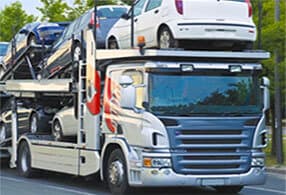
Open car transport, sometimes referred to as Open-Air Transport, is what you most often see rolling down the highway. It is open or exposed to the elements. Most car dealerships receive their inventory of vehicles in open-air carriers. Exposure to the elements means rain, snow, hail, dirt, and anything flying around in the open air. Open transport is the most cost-effective way to ship a vehicle, as multiple cars simultaneously reduce the cost per vehicle.
Open car shipping is ideal for people looking to transport their vehicle within a budget, as it is significantly less expensive than enclosed car shipping. It is also suitable for people looking to ship their vehicle within a shorter distance, as it is unnecessary to pay for the added protection that enclosed car shipping provides.
However, it is crucial to remember that open car shipping does not offer the same level of protection as enclosed car shipping. Exposing it to the elements and road debris during transit increases the risk of vehicle theft or damage.
The overwhelming majority of vehicles are shipped open vs. enclosed auto transport. Direct Express Auto Transport researched the number of open vs. enclosed transport carrier shipments on Central Dispatch and determined that 97% are open-air car transport.
One of the reasons why so many new car manufacturers are willing to ship their inventory to dealerships open car transport is because it is incredibly safe. Rarely are there physical damage complaints. And when that happens, it is usually something innocuous. Purportedly, open car transport damage complaints occur in only about 1% of car shipments, maybe less.
What Is Enclosed Car Transport?
Enclosed car transport, also known as enclosed trailer shipping, is a method of transporting a vehicle in a fully enclosed trailer. It offers the ultimate protection for the car shipped, protecting it from the elements, road debris, and any other potential damage during transport.
Enclosed car transport is the preferred method for luxury, exotic, and high-end vehicles, as well as vintage and classic cars. These vehicles require extra care and protection during transport to ensure that they arrive at their destination in the same condition as when loaded.
One of the significant benefits of enclosed car shipping is that it provides the highest level of security for the vehicle shipped. The car is fully enclosed and secured within the trailer, reducing the risk of theft or damage during transit.
Enclosed car transport is also ideal for people looking to transport their vehicle long distances, as it provides the most comfortable and secure option. However, the enclosed transporters are often undetected on the highway. The enclosed car shipping carriers protect the vehicles inside from the elements, assuring that neither rain, snow, sleet, hail, rocks, or anything else comes in contact.
Enclosed transport also means that vehicles arrive in the same condition they departed. Loading the car in a clean condition will mean it comes clean too. Enclosed carriers also have the extra protection of drip pans to prevent transmission fluids from getting on the bottom rack vehicles.
Only about 3% of vehicles are shipped enclosed by car transport. As mentioned, enclosed transport costs are typically 33% more than open-air transport. However, the expense for an auto transporter for hauling either an open-air or enclosed transport carrier is roughly the same. Because of that, the enclosed transport service must charge approximately 33% more than open-air car transporters.
When Does It Make Sense To Ship Your Car Enclosed?
- Expensive Vehicles
If a customer is shipping a vehicle worth over $100,000, he should consider shipping enclosed transport for two reasons: First, why take the chance with something so expensive? Consider enclosed transport and an extra insurance policy. Secondly, we know that open-air car carriers shy away from hauling costly vehicles because of the liability they incur. If given a choice between a $35,000 Honda Accord or a $100,000 Tesla, an open-air car transporter will likely opt for the less expensive vehicle if the payday is the same. Why? Less financial exposure.
- Low Ground Clearance
Low ground clearance vehicles of 4.5 inches or less should ship enclosed transport. Low-ground clearance vehicles will likely bottom out if driven onto an open-air carrier. That might damage the undercarriage of a vehicle. Nobody wants that. The enclosed car transporter has a lift gate for easy and safe loading.
- Collector Cars & Antique Vehicles
Some collector cars are difficult to replace. They should use enclosed shipping for obvious reasons. But another consideration that open car carriers employ is whether a vehicle can make the trip. Older cars might have loose parts that may fall off or get damaged simply by being on an open carrier, banging and vibrating down the road. Older vehicles, even if not worth much anymore, can be a liability, and open transporters will choose more recent year models to haul instead. Unless a customer does not care, which is hard to imagine, it would be wiser to ship any vehicle older than 50 years by enclosed car transport.
Which is the Best Option for You?
The choice between enclosed and open-air car shipping ultimately depends on the individual’s specific needs and preferences. If you are looking to transport a luxury, exotic, or high-end vehicle, or if you are looking to transport your vehicle long distances, enclosed car shipping may be the best option.
Open car shipping may be the best option if you want to transport your vehicle within a budget and shorter distance.
Our Conclusion
In conclusion, both enclosed and open-air car shipping have pros and cons, and the choice depends on the individual’s specific needs and preferences. It is essential to weigh the benefits and drawbacks of both options and choose the method that best suits your needs.
The most important thing is to ensure that your vehicle arrives at its destination in the same condition as loaded. Direct Express Auto Transport is committed to delivering your vehicle safely and soundly whether you choose enclosed or open car transport.

